The Thursday Butcher and the 4 a.m. Baker: When Small-Town America Fed Itself
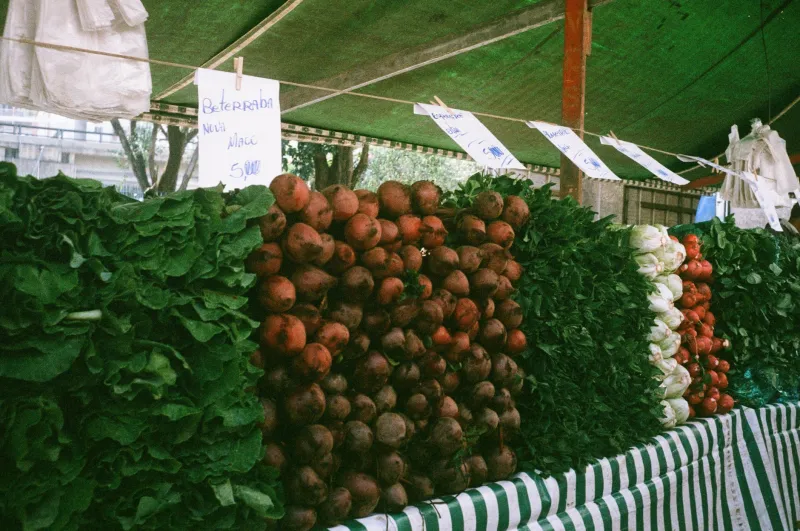
Photo: Steve Shook from Moscow, Idaho, USA, CC BY 2.0, via Wikimedia Commons
On Thursday mornings in a thousand small American towns, you knew not to sleep in if you wanted a good cut. The butcher slaughtered on Wednesday — everyone in town knew that — and if you showed up by mid-morning Thursday, you'd get your pick. Wait until Friday and you'd be working with what was left. By Saturday, the good stuff was memory.
That was just the rhythm of it. Food had a schedule, and you worked around it.
For most of American history, eating wasn't a passive act. It required knowing your town — its producers, its calendars, its particular geography of abundance. The dairy was two miles east. The egg woman came through on Tuesdays. The baker started at 4 a.m. so the bread would be ready when the town woke up. None of this required a smartphone or a delivery window. It required being a participant in the place where you lived.
A Web, Not a Chain
The food economy of mid-century small-town America wasn't a system in the modern sense — it was an ecosystem. Dozens of small producers, processors, and sellers operated in overlapping orbits around the communities they served. The dairy farmer knew the families who bought his milk. The butcher knew which households preferred shoulder cuts and which ones always asked for the liver. The grocer — there was usually one, sometimes two — stocked shelves with goods that reflected what the region actually produced rather than what a corporate planogram dictated from a distant headquarters.
Seasonal eating wasn't a lifestyle choice. It was reality. Tomatoes in August tasted like tomatoes because they'd been in the ground two miles away until yesterday. Corn arrived in a narrow window and everyone knew it. Strawberries came and went so fast that the whole town seemed to orient itself around them for about three weeks each June.
Preservation was a skill set, not a hobby. Women — and it was mostly women — spent late summer canning, pickling, and putting up enough to bridge the winter. Root cellars weren't quaint. They were functional infrastructure. The food that appeared on a January dinner table in rural Ohio or central Kansas had been planned for months in advance.
The Infrastructure That Changed Everything
The transformation didn't happen all at once, but its engine was unmistakable: the interstate highway system, built in earnest through the late 1950s and 1960s, combined with advances in refrigerated transport and industrial food processing, made it possible — and then economically irresistible — to centralize the American food supply.
Suddenly, a tomato grown in California could arrive in a Maine grocery store in winter. A chicken processed in a massive facility in Arkansas could reach a supermarket shelf in suburban Ohio cheaper than anything the local farmer could offer. Regional grocery chains expanded aggressively, undercutting the corner store on price and overwhelming it on variety. The local butcher couldn't compete with a supermarket meat counter staffed by union employees and supplied by a national processor. The dairy two miles out couldn't match the scale of a consolidated operation a hundred miles away.
One by one, the nodes of the local food web went dark. The butcher retired and nobody took over the shop. The dairy consolidated or sold out. The baker found that customers preferred the longer-lasting loaves on the supermarket shelf, even if those loaves contained more chemistry than flour.
By 1980, the transformation was largely complete in most of America. The supermarket had won.
What 'Fresh' Stopped Meaning
Here's the thing about that California tomato in a Maine winter: it wasn't really fresh. It was harvested green, gassed with ethylene to trigger color, and shipped across the country in a refrigerated container. It looked like a tomato. In certain technical senses, it was a tomato. But anyone who remembered what a tomato tasted like in August — picked ripe, still warm from the vine — knew they were dealing with a different object entirely.
This is where the language started to slip. 'Fresh' became a word that meant 'not canned' rather than 'recently harvested.' 'Local' became meaningless without a definition — the USDA has never settled on one. 'Seasonal' became something restaurants put on menus as a selling point, a curiosity rather than a baseline expectation.
The centralization of the food supply delivered genuine benefits. It reduced spoilage at scale. It lowered prices. It made certain foods available year-round that had previously been luxuries or impossibilities depending on where you lived. A family in North Dakota in February could now eat oranges. That's not nothing.
But the trade-offs were real and mostly invisible. The money that once circulated through a local food economy — from household to farmer to butcher to baker and back around again — now flowed out of town to corporate headquarters in distant cities. The skills embedded in that economy — butchering, canning, baking from scratch, knowing how to evaluate produce by sight and smell — began to atrophy within a generation.
The Irony of the Farmers Market Revival
Drive through any mid-sized American city on a Saturday morning and you'll find a farmers market. Local produce, artisan bread, small-batch preserves. People paying $6 for a jar of jam and feeling good about it. The hunger for that older food economy is clearly real.
But there's an irony embedded in the revival. What was once the default way American communities fed themselves has become a premium experience — something you opt into on weekends, something that requires extra time and extra money. The Thursday butcher wasn't a luxury. He was just the butcher. The 4 a.m. baker wasn't artisanal. He was just doing his job.
The words 'local' and 'fresh' are now marketing slogans precisely because they describe something exceptional. A few generations ago, they described something ordinary.
Maybe the most honest thing we can say about the transformation of the American food supply is this: we got more, and we got it cheaper, and we got it year-round. And somewhere in the process, we forgot what more actually tasted like.