The Chair, the Clippers, and the Conversation: What Died When the Barbershop Went Corporate
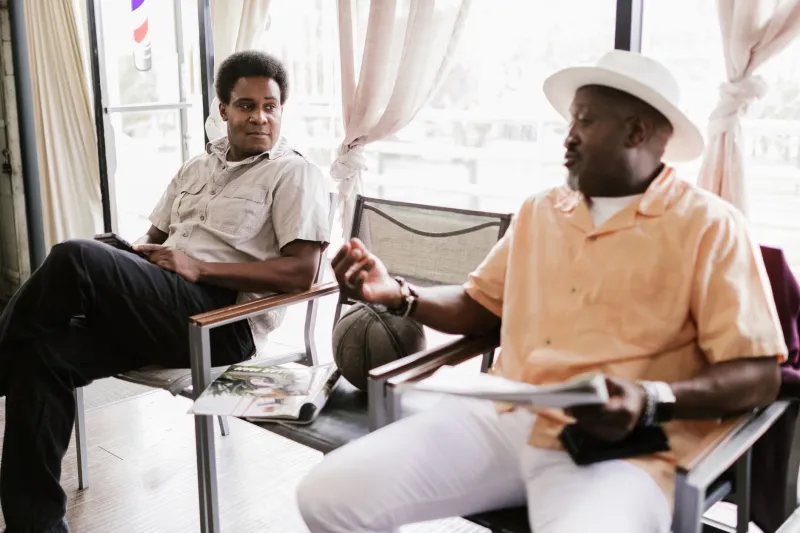
Somewhere between the spinning red-and-white pole and the laminated price list taped to the register, there used to be something that had nothing to do with hair. The neighborhood barbershop, for most of the twentieth century, was one of the last genuinely democratic spaces in American life. You sat down, you waited your turn, and while you waited, you talked. To whoever was next to you. About anything.
That sounds unremarkable until you realize how rarely it happens anymore.
The Original Third Place
Sociologists have a term for spaces that are neither home nor work but still essential to how communities function: third places. The barbershop was one of America's most reliable ones, long before anyone had a name for it. In small towns across the country — from rural Ohio to the Texas Panhandle — the barbershop was where you went to find out what was actually happening. Not what the newspaper said. What people said.
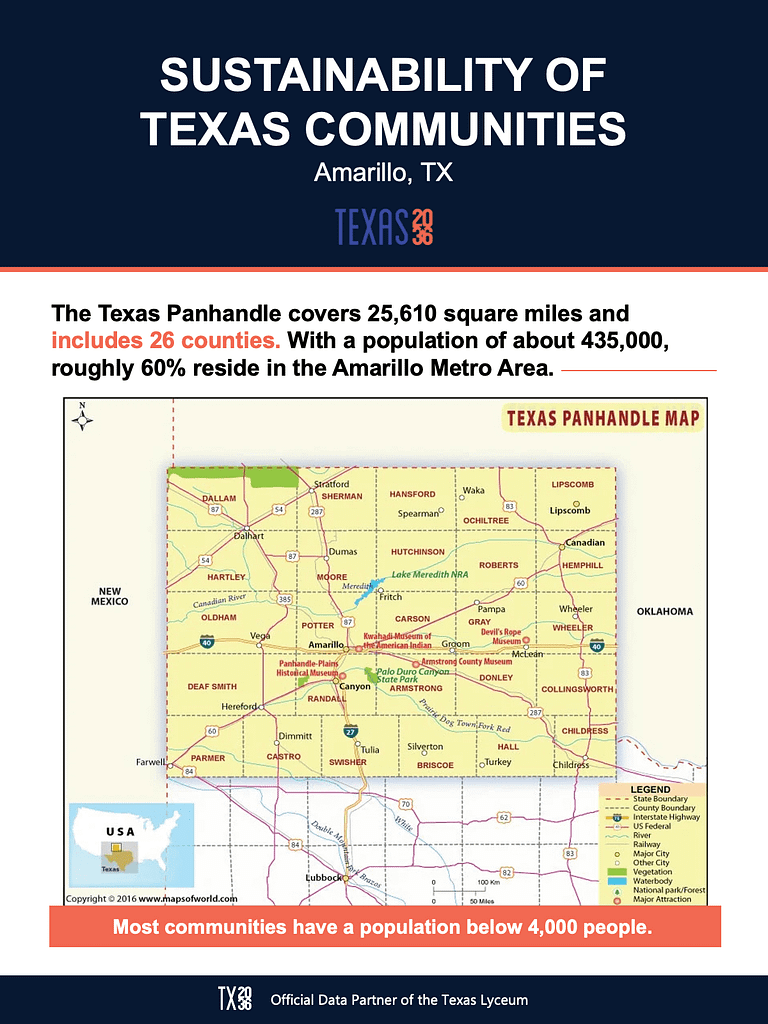 Photo: Texas Panhandle, via mlu3fafnp1cd.i.optimole.com
A barber in mid-century America typically knew his clients for years, sometimes decades. He knew which families were struggling, which kids had just made the varsity team, which local businesses were quietly closing. He remembered your preferred taper. He remembered your father's preferred taper. The relationship wasn't transactional in any modern sense — it was woven into the fabric of how a neighborhood understood itself.
Think about what that actually looked like on a Saturday morning in 1962. Four or five men waiting on wooden chairs. A conversation already in progress about last night's game, or the new road they were building out on Route 9, or whether the mayor was worth a damn. Nobody was looking at a phone. Nobody was anywhere else. They were just there, in the way that people used to be before the world gave them so many options for being somewhere else instead.
What the Franchise Did to the Ritual
The shift happened gradually, then all at once. Franchise chains started appearing in strip malls during the 1980s and accelerated hard through the 1990s. Great Clips. Sports Clips. Supercuts. They offered something the old shops couldn't easily compete with: consistency, speed, and lower prices. Walk in, wait maybe ten minutes, walk out. No appointment necessary. No small talk required.
For a certain kind of busy American life, that was genuinely appealing. But something structural changed when the model shifted. The barber who sees thirty different clients in a day on a franchise floor isn't building relationships — he or she is processing customers. The economics don't allow for anything else. Turnover is high among stylists, which means even if you wanted to build a rapport, there's a reasonable chance your person won't be there next month.
Then came the apps. Now you can book a haircut the same way you order a rideshare. You select your stylist, your time slot, your service type. You show up, you get cut, you tap to pay and rate your experience on a five-star scale. It is extraordinarily efficient. It is also, in almost every way that matters socially, the opposite of what a barbershop used to be.
The Civic Dimension Nobody Talks About
Here's the part that tends to get overlooked in conversations about the decline of local businesses: the barbershop had a civic function. In Black communities especially, the barbershop served as an irreplaceable gathering point — a space where men could speak freely, debate politics, support one another, and maintain a sense of collective identity that wasn't available in many other public spaces. Scholars have written entire books on this. The barbershop wasn't just a place to look sharp for Sunday. It was infrastructure.
But even in predominantly white small towns, the shop carried a similar weight. It was where opinions formed and circulated before they reached the town council meeting. It was where a grieving man could sit among other men without having to explain why he needed to be around people. It was where a teenager got his first real conversation with an adult who wasn't his father.
None of that shows up in a Yelp review. None of it gets captured when you rate your stylist three stars because the wait was longer than the app promised.
Is Anything Coming Back?
There's been a genuine revival of independent barbershops over the last decade, particularly in urban neighborhoods. Many of them have leaned hard into the old aesthetic — vintage chairs, straight-razor shaves, jazz on the speakers, no rush. They charge more, sometimes significantly more, and they've found a clientele willing to pay for the experience of slowing down.
That's real, and it's worth acknowledging. But it's also worth being honest about what it is: a premium experience marketed to people with the income and the leisure time to seek it out. The mid-century barbershop wasn't a premium experience. It was just Tuesday. Farmers went. Factory workers went. The guy who fixed your furnace went. It was ordinary in the best possible sense — available to everyone, belonging to everyone.
What the Empty Chair Left Behind
When you look at the data on social isolation in America — and the data is genuinely alarming, with studies showing that loneliness has reached levels some researchers describe as an epidemic — it's tempting to look for a single cause. There isn't one. But there's a pattern. The spaces where Americans used to gather without an agenda, without a purchase requirement, without a screen mediating the interaction — those spaces have been disappearing one by one for fifty years.
The barbershop is one of them. Not the most important one. Not the only one. But a telling one, because it was so ordinary, so unremarkable, so easy to let go of without noticing what was actually being lost.
You didn't go to the barbershop to make friends. You just went. And somehow, that was enough.