Thirty-Six Shots and You Meant Every One: The Era Before We Photographed Everything and Remembered Nothing
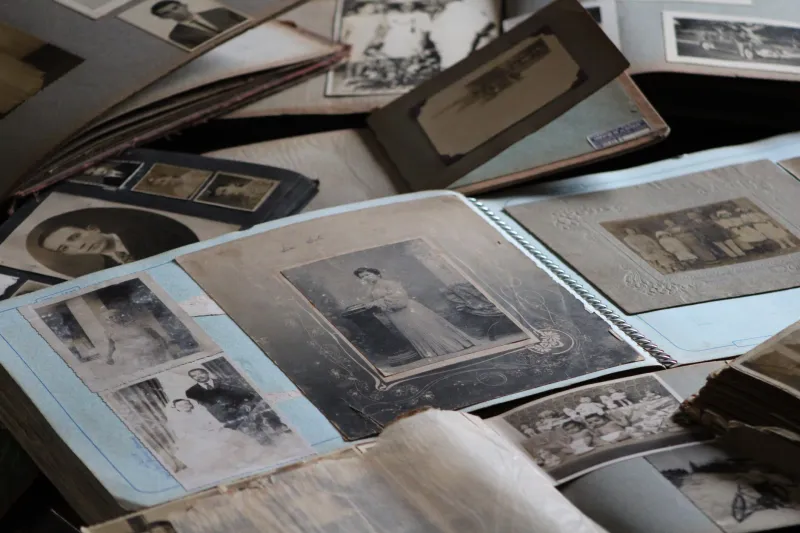
There's a shoebox in a lot of American homes — maybe in a closet, maybe under a bed — stuffed with printed photographs from the 1980s and '90s. Blurry birthday parties. Overexposed beach trips. Someone's thumb accidentally blocking the lens at Niagara Falls. And yet, somehow, those imperfect little rectangles feel more real than the 47,000 pictures sitting unviewed in your iPhone.
That's not nostalgia talking. That's a genuine shift in how we relate to memory — one that happened so fast most of us didn't notice it.
The Economy of a 36-Exposure Roll
For most of the 20th century, taking a photograph was an act of deliberate commitment. You loaded a roll of film — typically 24 or 36 exposures — and that was your budget. Every click cost money. Not just the film itself, but the development: you'd drop off the roll at a drugstore or a one-hour photo lab, pay somewhere between $8 and $15, and wait. Sometimes days. Sometimes you'd forget what you even shot by the time the envelope came back.
That waiting period mattered more than people realized. It created a gap between the moment and the memory — a space where anticipation lived. When you finally flipped through the prints, you were genuinely seeing those moments again, often surprised by what you'd captured or what you'd forgotten.
Because film was finite, people made choices. You didn't photograph your lunch. You didn't take 14 nearly identical shots of the same sunset hoping one would look good. You composed, you waited for the right moment, and you pressed the shutter with some intention behind it. Not every time — plenty of thumbs and red-eye disasters made it into the envelope — but the scarcity forced a kind of mindfulness that digital photography quietly erased.
The Album as a Curated Life
What happened after the prints came back was its own ritual. Families would sit together and sort through the stack, laughing at the bad ones, setting aside the keepers. Then came the album — those sticky-page binders or the ones with little corner mounts — where the best images got a permanent home.
Flipping through a photo album was an act of storytelling. The pictures were sequenced, sometimes labeled in pen on the white borders. Grandparents sat with grandchildren and pointed at faces, explained contexts, passed down names. The album was a physical object you could hand across a table. It had weight. It smelled faintly of the decade it came from.
Critically, it was curated. Not every moment made the cut. The 12 shots where everyone had their eyes closed got thrown away. What remained was a distilled version of a life — the moments someone decided were worth keeping and worth showing.
When Infinite Storage Made Everything Disposable
The shift started in the early 2000s and accelerated fast. Digital cameras removed the cost-per-shot anxiety. Suddenly you could take 200 pictures at a birthday party and delete the bad ones later. Except "later" never really came.
Then smartphones arrived and the floodgates opened completely. By 2023, Americans were taking an estimated 1.4 trillion photographs per year globally — a number so large it's essentially meaningless. The average person now has thousands of images on their phone they've never looked at twice. Photos from three years ago might as well be from another lifetime, buried under layers of screenshots, memes, and half-remembered sunsets.
Here's the paradox: we are the most photographed generation in human history, and yet many people feel like their memories are somehow less vivid, less preserved. The act of taking a photo has become reflexive rather than intentional — a twitch response to anything visually interesting, rather than a considered decision to hold onto a moment.
When everything gets photographed, nothing feels particularly worth photographing.
The Ritual We Traded Away
There's a reason people still print photos for major milestones — weddings, graduations, new babies. Some instinct tells us that a digital file on a server isn't quite the same as a physical object in a frame. We haven't fully abandoned the idea that prints matter. We've just gotten too busy (and too overwhelmed by volume) to act on it.
The one-hour photo lab is almost entirely gone. Kodak, the company that defined American photography for over a century, filed for bankruptcy in 2012. The drugstore photo counter that used to anchor Saturday morning errands is a relic. What replaced it is a cloud drive with 40,000 images organized by date, occasionally surfaced by an algorithm that reminds you what you were doing three years ago today.
Those algorithmic "memories" are oddly moving — and oddly hollow. A machine decided this moment was worth revisiting. You didn't.
What Scarcity Actually Gave Us
It would be easy to romanticize the film era too heavily. Plenty of important moments went uncaptured because someone forgot to load the camera. Rolls got lost. Development ruined irreplaceable images. The friction wasn't always charming — sometimes it was just frustrating.
But that friction also created something worth examining: intentionality. When you couldn't photograph everything, you had to decide what mattered. And the things you decided to photograph, you tended to actually remember — because you were present enough to make the choice.
Today, the camera is always on. The phone is always in hand. And yet, ask someone to describe a vacation they took two years ago without looking at their photos, and watch them struggle. We documented everything and retained surprisingly little.
The shoebox under the bed, with its 80 imperfect prints from a 1994 camping trip, might actually contain more living memory than a cloud folder with 3,000 images from last summer. Not because the old technology was better — but because the limitation forced us to pay attention.
That's the thing about constraints. Sometimes they're the whole point.