Staring at the Ceiling Was Good for You: The Quiet Gift of Having Nothing to Do

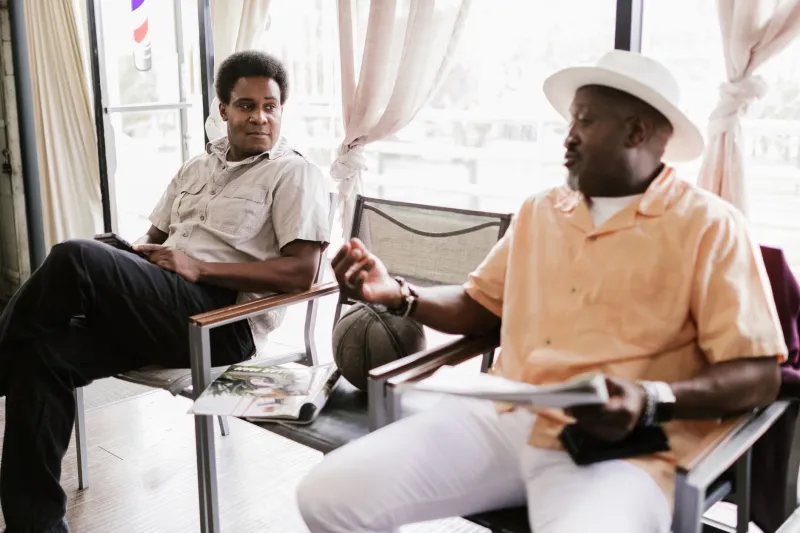
There used to be a particular kind of time that existed nowhere else — the thirty-seven minutes you spent in a doctor's waiting room, or the long, fluorescent stretch of a DMV afternoon, or the gate hold at an airport when the departure board just said Delayed and meant it. You couldn't go anywhere. You couldn't really do anything. So you picked up a magazine that was eight months old, read a recipe you'd never make, and let your mind wander.
Nobody called that therapeutic. Nobody called it anything. It was just Tuesday.
But somewhere between the BlackBerry and the iPhone, that particular flavor of time disappeared. And a growing number of researchers think we should probably want it back.
The Magazine Pile Was a Social Object
Walk into most waiting rooms in the 1970s, '80s, or '90s and you'd find the same thing: a low table covered in a loose archaeology of print media. People from three months ago. A Sports Illustrated with a coffee ring on the cover. Maybe a Reader's Digest or a regional fishing magazine that nobody could explain. The stack had no curation, no algorithm, no awareness of your preferences. It was just whatever had accumulated.
And that randomness was the whole point.
You might pick up a National Geographic because it was the only thing left, and end up genuinely absorbed in a story about the Mekong Delta. You didn't choose it. The waiting room chose it for you. That kind of accidental discovery — stumbling across something you never would have sought out — is almost impossible to replicate when a device in your pocket already knows what you like and feeds it to you endlessly.
The magazine pile also did something subtler. It was shared. You'd glance over at the person next to you and notice they were reading the same issue you'd just put down. Sometimes that started a conversation. Sometimes it didn't. But there was a common object between you, a tiny piece of shared experience in a room full of strangers.
What Psychologists Actually Found Out About Boredom
For most of the twentieth century, boredom was treated as a minor inconvenience — something to be managed or endured. But starting in the 2000s and accelerating through the 2010s, researchers began taking a harder look at what happens in the brain during unstructured, low-stimulation time.
What they found was surprising. Boredom, it turns out, activates what neuroscientists call the default mode network — the part of the brain that handles introspection, memory consolidation, creative thinking, and what researchers loosely describe as "mind-wandering." When you're not actively processing external information, your brain doesn't go quiet. It gets to work on the inside stuff: unresolved problems, emotional processing, long-term planning, the kind of thinking that doesn't happen when you're reacting to a feed.
A 2014 study published in Psychological Science found that people who completed a boring task before a creativity exercise generated significantly more creative ideas than those who went straight to the task. The boring interlude, researchers concluded, gave the mind room to roam.
The waiting room wasn't wasted time. It was, in the most literal neurological sense, productive time — just not in any way that showed up on a to-do list.
The Moment Screens Filled the Gap
The shift happened fast. By 2010, smartphones were mainstream. By 2013, pulling out your phone the moment you sat down to wait had become a reflex so automatic that most people couldn't have told you they were doing it. The waiting room didn't change. The people in it did.
What replaced the old idle time wasn't rest or reflection. It was low-grade stimulation — scrolling, checking, refreshing. The phone offered the sensation of activity without the substance of it. You weren't bored, but you weren't really thinking either. You were just... occupied.
Sociologist Sherry Turkle, who has spent decades studying how technology reshapes human behavior, described this shift in her 2015 book Reclaiming Conversation as a loss of "the capacity for solitude." Not physical solitude — just the internal kind. The ability to sit with your own thoughts without immediately reaching for distraction.
Turkle's research found that people who filled every spare moment with device use reported higher anxiety, lower creativity, and a diminished sense of self-knowledge. They were always reacting. They rarely just were.
The Art of the Overheard Conversation
There's another thing the waiting room used to produce that's worth mentioning: accidental community.
When you weren't staring at a screen, you noticed other people. You heard the woman across from you mention that she'd been coming to this same clinic for fifteen years. You exchanged an eye-roll with a stranger when the receptionist announced another forty-five minute delay. Small moments, mostly meaningless — but they were real human contact with people outside your existing social network.
Sociologists call these interactions "weak ties" — the casual, low-commitment connections with acquaintances and strangers that research consistently shows are critical to social wellbeing and community cohesion. Robert Putnam's landmark work Bowling Alone tracked the decline of these connections across American life, and the smartphone accelerated everything he was describing.
When we filled the silence with screens, we didn't just lose boredom. We lost the small, unremarkable moments of contact with the people sitting right next to us.
What the Ceiling Had to Offer
None of this means the old waiting room was paradise. Nobody was grateful for a two-hour DMV line. The magazines were always out of date, the chairs were always uncomfortable, and the wait was always longer than they told you.
But there's a difference between suffering through boredom and learning to exist inside it. Generations of Americans did the latter without thinking much about it. They sat. They waited. Their minds drifted to things they hadn't thought about in months — a conversation they needed to have, a decision they'd been avoiding, a memory that surfaced without invitation.
That kind of thinking doesn't happen on a schedule. It happens in the gaps. And we've spent the last fifteen years sealing every gap we could find.
The waiting room magazine stack wasn't really about magazines. It was about what happened when there was nothing else to do — and you found out, maybe a little reluctantly, that your own mind was actually pretty decent company.