He Showed Up With a Toolbox and Fixed It on Your Kitchen Floor
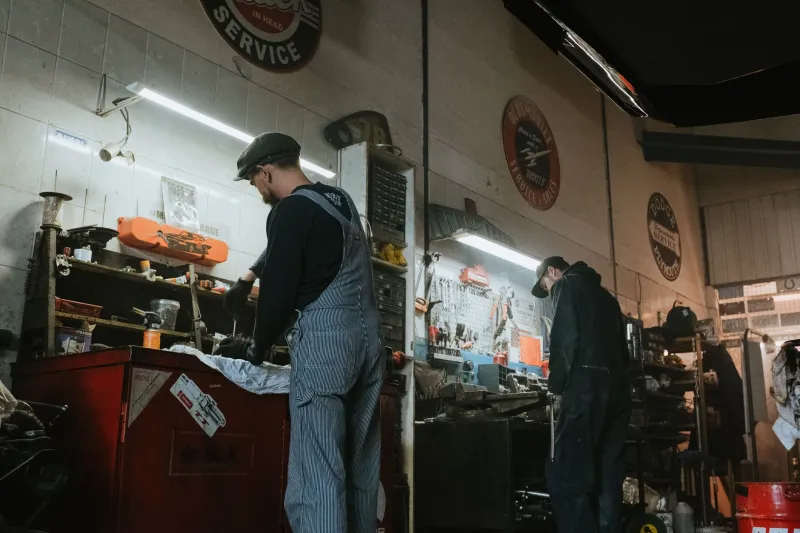
Somewhere around 1967, a washing machine in a ranch house in suburban Ohio stopped spinning mid-cycle. The family didn't panic. They didn't Google anything. They didn't schedule a two-week appointment window or get routed through an automated phone system asking them to press 1 for English. They called a guy. His name was probably something like Earl. And Earl showed up the next morning with a metal toolbox, a cigarette behind his ear, and an encyclopedic knowledge of every appliance made in the last twenty years.
By noon, the machine was running.
That was the era of the mobile repairman — and it was a more self-sufficient America than most of us can even imagine now.
The Man Behind the Van
In the postwar decades, American households were filling up fast with new appliances. Refrigerators, televisions, washing machines, electric ranges, radios — the consumer economy was booming, and every family wanted a piece of it. But these were not disposable gadgets. A refrigerator cost the equivalent of several weeks' wages. A television set was practically a piece of furniture. When something broke, you fixed it. Full stop.
And fixing it meant calling someone who actually knew what they were doing.
Most mid-sized towns had a handful of independent repair shops, but the real workhorses of the trade were the mobile repairmen — sole operators who drove a van or a station wagon loaded with spare parts, diagnostic tools, and years of hands-on experience. They advertised in the Yellow Pages. They had magnetized signs on their doors. They were known by name on their routes.
 Photo: Yellow Pages, via c8.alamy.com
These weren't contractors dispatched by a corporate call center. They were neighbors. They knew which brands were reliable and which ones had a recurring flaw in the third year. They could tell you whether your refrigerator's compressor was worth saving or whether you'd be better off calling the appliance store. And because their reputation was entirely local, they had every reason in the world to do the job right.
A Trade Built on Trust
The economics of home repair in that era were surprisingly personal. Many repairmen operated on an informal billing system — parts at cost, labor by the hour, and a handshake at the end. Some kept running tabs with longtime customers. Others would knock a few dollars off for a widow on a fixed income because that's just what you did.
This wasn't charity. It was community infrastructure.
When Earl fixed your washing machine, he was also part of the social fabric of the block. He knew which families had which appliances. He remembered that the Hendersons had an older Maytag with a particular quirk in the agitator. He'd seen the inside of half the kitchens on the street. In a way, the repairman occupied a role that sat somewhere between tradesmen and trusted advisor — a guy you called not just when things broke, but when you weren't sure whether they were worth fixing at all.
That kind of embedded, practical knowledge doesn't really exist in the same form anymore.
The Slow Unraveling
The decline didn't happen all at once. It rarely does.
Through the 1970s and into the 1980s, a few things started to shift. Manufacturing moved overseas. The cost of producing appliances dropped significantly, which sounds like a good thing — and in some ways it was. But cheaper production also meant thinner margins on repair. When a new microwave cost $79, paying $60 in labor to fix the old one started to feel irrational.
Manufacturers quietly embraced this logic. Products were increasingly designed with proprietary parts that couldn't easily be sourced by independent repairmen. Warranty terms pushed consumers toward authorized service centers — usually far away, usually slow, and often just as expensive as buying new. The independent mobile repairman, who had thrived in an ecosystem of fixable, standardized machines, found himself squeezed out.
Then came the big-box era. Best Buy, Sears service departments, and eventually the internet transformed appliance service into a centralized, appointment-based, often frustrating experience. You didn't call a guy. You submitted a ticket. You waited. Sometimes weeks.
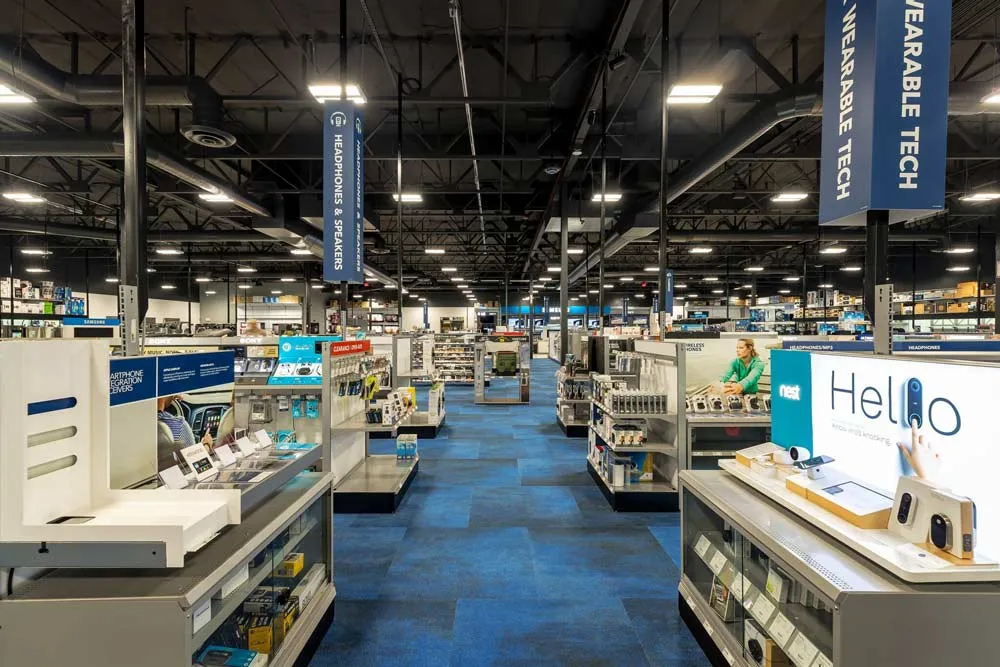 Photo: Best Buy, via assets-global.website-files.com
And more often than not, the technician who eventually showed up was working from a script, unable to deviate from a manufacturer-approved repair list, and not authorized to tell you honestly whether the machine was worth saving.
What We Actually Lost
There's a tendency to frame this kind of change as progress — as if the centralization of services is simply the natural result of efficiency improving. But efficiency for whom, exactly?
The mobile repairman era kept money circulating locally. It kept appliances in service longer, which meant less waste. It kept a certain class of skilled, independent worker employed without requiring a college degree or a corporate sponsor. And it kept households from the anxiety spiral of a broken appliance meaning an automatic $400 replacement purchase.
Today, the average American throws away roughly 46 pounds of electronic and appliance waste per year. The repair economy that once existed to prevent that has been almost entirely dismantled — replaced by a culture that treats a five-year-old refrigerator like a five-year-old phone: something to upgrade rather than maintain.
There are small signs of pushback. The Right to Repair movement has gained real traction in recent years, pushing back against manufacturer restrictions that make independent repair nearly impossible. Some cities have seen a modest revival of repair cafés — community spaces where volunteers help neighbors fix broken items for free. It's a start.
But it's a long way from Earl showing up at your door with the right part already in his toolbox.
The Era That Trusted Competence
What the mobile repairman represented wasn't just a service. It was a philosophy — the idea that things worth owning were worth maintaining, and that the people who knew how to maintain them deserved a living wage and a regular customer base in return.
We traded that for cheaper appliances, faster shipping, and the quiet assumption that replacement is always easier than repair.
Maybe it is. But something got lost in the trade — a layer of self-sufficiency, of neighborhood economy, of practical trust between people who needed things fixed and people who knew how to fix them.
Earl would have known what it was. He probably could have fixed it, too.