The Man Who Knew Every Screw: How America's Hardware Sage Got Replaced by Endless Aisles
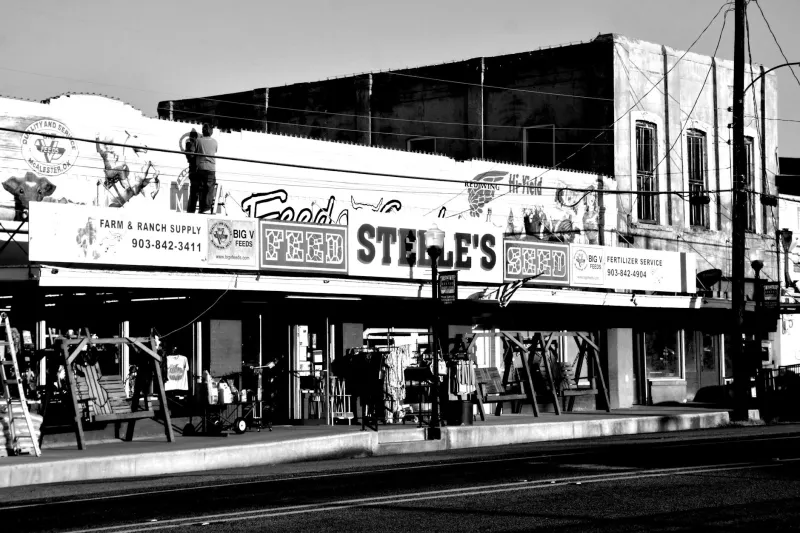
Walk into Miller's Hardware in 1975, and before you could finish describing your leaky faucet, old Pete Miller was already heading toward aisle three. "Sounds like you need a new O-ring," he'd call over his shoulder, pulling out a small rubber circle that cost thirty-seven cents and would solve your problem completely. He'd throw in installation advice for free, ask about your wife's garden, and send you home feeling like a competent human being.
 Photo: Pete Miller, via img-s-msn-com.akamaized.net
 Photo: Miller's Hardware, via images.provenexpert.com
Walk into a modern big-box store with the same leaky faucet, and you'll spend forty minutes wandering through aircraft hangar-sized aisles, watching YouTube videos on your phone, and eventually buying $47 worth of parts you're not sure you need.
The Oracle Behind the Counter
The independent hardware store wasn't just a retail establishment—it was a repository of accumulated wisdom that took decades to build and could disappear overnight. Pete Miller didn't learn about plumbing from a corporate training manual. He learned it from thirty years of helping neighbors fix their houses, from conversations with local contractors, and from the kind of hands-on problem-solving that you can't download from the internet.
When Mrs. Peterson brought in a broken window latch from her 1920s bungalow, Pete didn't need to look it up. He'd seen that exact latch a dozen times, knew which manufacturer made it, and probably had the replacement part in a coffee can behind the paint mixer. If he didn't have it, he knew a guy who did, or he'd order it special and call you when it came in.
This wasn't just customer service—it was neighborhood infrastructure. The hardware store owner served as the unofficial consultant for every home repair project within a five-mile radius, the guy who could tell you whether your foundation crack was serious or just settling, whether that electrical buzz meant you needed an electrician or just a new outlet.
The Warehouse Revolution
Then came the big-box revolution, promising lower prices and unlimited selection. The math seemed simple: why pay Pete Miller's markup when you could drive fifteen minutes to a warehouse store and save 30% on everything? The corporate efficiency experts had figured out how to strip away all the "unnecessary" overhead—the personal service, the local knowledge, the guy who remembered what you bought last month.
What nobody calculated was the hidden cost of losing that expertise. Sure, the new stores had more SKUs than Pete could have stocked in a lifetime, but they also had teenage employees who couldn't tell a Phillips head from a flat head, let alone diagnose why your toilet keeps running.
The big-box model assumed customers would become their own hardware experts, that anyone could learn what Pete Miller knew just by reading product descriptions and watching online tutorials. It was a massive bet on the idea that information could replace experience, that Google could substitute for the accumulated wisdom of a lifetime spent solving other people's problems.
The YouTube University Problem
Modern home improvement has become a bizarre dance between infinite online information and zero practical guidance. You can watch a thousand videos about replacing a garbage disposal, but none of them will tell you that the electrical box in your 1960s ranch house is wired differently than the standard tutorial assumes, or that the mounting bracket they show won't fit your particular sink configuration.
Pete Miller would have spotted those problems immediately. He'd seen your type of house before, worked on your model of sink, and dealt with the quirky electrical work that every neighborhood contractor did differently. He was a living database of local knowledge that no algorithm could replicate.
The cruel irony is that we've never had more access to information about home repair, yet Americans feel less capable of fixing things themselves than ever before. We traded the hardware sage for the hardware warehouse, and somehow ended up more confused than when we started.
The Death of Diagnostic Retail
What died with the independent hardware store wasn't just personalized service—it was diagnostic retail, the lost art of figuring out what customers actually needed rather than just selling them what they asked for. Pete Miller understood that most people couldn't properly diagnose their own problems, that the broken part they brought in was often just a symptom of a deeper issue.
When someone came in complaining about a door that wouldn't stay closed, Pete wouldn't just sell them a new latch. He'd ask about house settling, check if they needed weather stripping, maybe suggest that the real problem was a warped frame that needed shimming. He was part retailer, part consultant, part therapist for frustrated homeowners who just wanted their stuff to work.
Modern retail has abandoned this diagnostic function entirely. The big-box model assumes customers know exactly what they need and just want the lowest price. If you buy the wrong part, that's your problem. If you need three trips to complete a simple repair, that's three chances for them to sell you more stuff.
The Loneliness of Modern Repair
Perhaps the saddest loss is the social aspect of the old hardware store experience. Fixing your house used to be a community activity, with Pete Miller serving as the central hub of neighborhood repair knowledge. You'd run into other customers dealing with similar problems, pick up tips from overheard conversations, and leave feeling connected to a network of people who cared about maintaining their homes.
Now home repair is a solitary struggle between you, your broken appliance, and a screen full of conflicting advice from strangers on the internet. We've gained efficiency and lost community, traded the hardware sage for the hardware algorithm.
The Price of Cheap
The big-box stores won the price war, but they couldn't replace what they destroyed. They could stock ten thousand different screws, but they couldn't replicate the guy who knew which one you needed just by looking at the hole in your deck board. They could offer rock-bottom prices, but they couldn't provide the confidence that came from Pete Miller's nod of approval when you described your repair plan.
We saved money on hardware, but we lost something harder to quantify: the security of knowing that help was just a short drive away, that someone in your neighborhood had seen your problem before and knew how to fix it. In gaining the warehouse, we lost the sage—and most of us didn't realize what we'd given up until we found ourselves standing alone in aisle 47, holding a broken faucet part and wondering why nobody seemed to know what it was for.