Backyards Used to Buzz With Life. Now They're Just Grass Nobody Sits On.
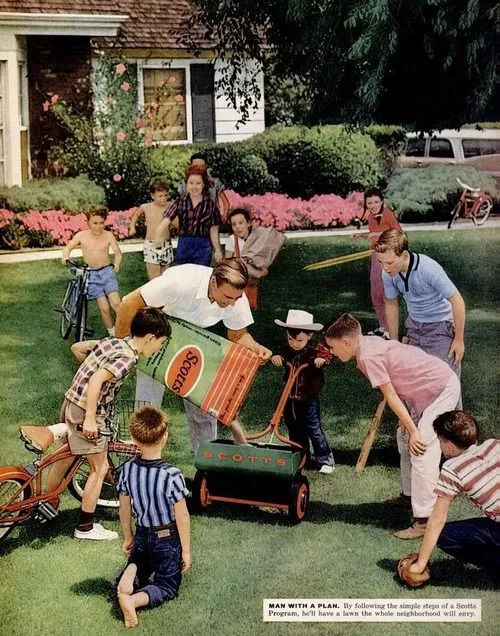
Photo: 1960s suburban backyard children playing summer neighborhood, via i.pinimg.com
Backyards Used to Buzz With Life. Now They're Just Grass Nobody Sits On.
Postwar American suburbs were designed around a simple idea: give families outdoor space and they'll use it. For a few decades, they did. Kids built things, neighbors talked over fences, and summer evenings had a sound — the whole block outside at once. Somewhere along the way, we stopped going out there. The backyard became something you look at through a window rather than live in.
This is a quiet loss. Nobody announced it. There was no single moment when America's backyards went silent. It happened gradually, season by season, as a handful of cultural forces slowly drained the outdoor spaces of their original purpose and left behind something that looks great on a real estate listing but doesn't actually get used.
What the Backyard Once Was
In the 1950s and '60s, the American backyard was essentially a shared outdoor room — informal, loud, and constantly occupied. Kids from three houses over would appear without warning. Adults pulled lawn chairs into the grass without consulting anyone's schedule. Somebody's dad was always grilling something. The physical boundaries of the yard existed, but the social boundaries were porous in the best way.
This wasn't limited to wealthy neighborhoods. Working-class suburbs from New Jersey to Southern California operated the same way. The backyard was democratic space. A garden hose, a sprinkler, and a patch of grass was enough to anchor an entire afternoon. Fireflies in a jar. Badminton nets that sagged in the middle. Screen doors that slapped shut twenty times before dinner.
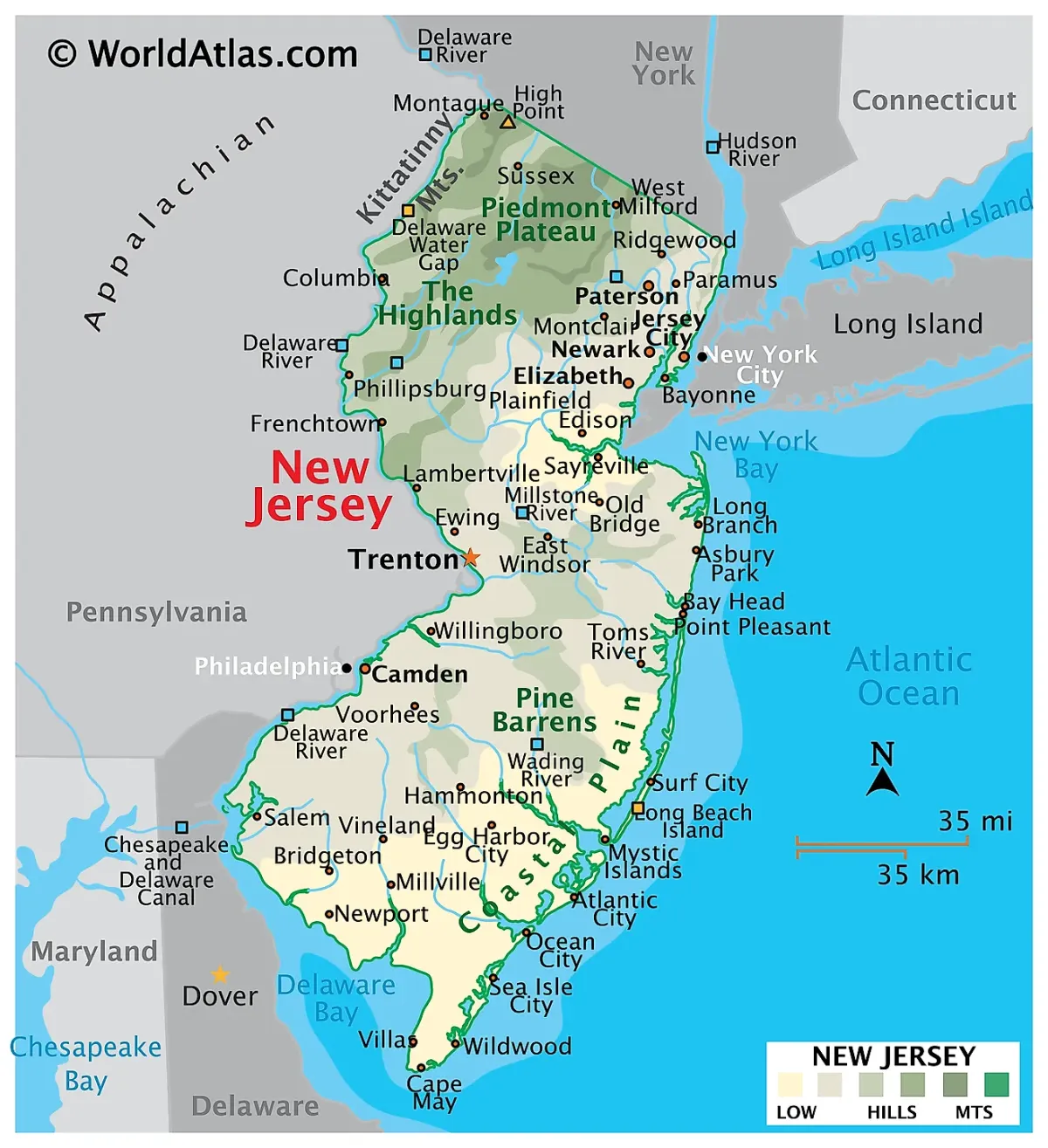 Photo: New Jersey, via www.worldatlas.com
The sounds of it were specific: lawn mowers in the distance, kids arguing about rules nobody had written down, the particular echo of a ball bouncing off a garage door. It was unplanned, unoptimized, and genuinely alive.
The Fencing of America
The first thing that changed was the fence. Through the postwar decades, many suburban yards had low borders — chain-link, split rail, or nothing at all. Neighbors could see each other. Kids could drift between properties. The physical landscape encouraged casual contact.
Starting in the 1970s and accelerating through the '80s and '90s, privacy fencing became a suburban standard. Six-foot wooden panels went up across the country, and with them came a subtle but real shift in how people related to their outdoor space. The backyard became a private enclosure rather than a semi-shared zone. You could no longer see your neighbor's yard, which meant you also couldn't see your neighbor.
This wasn't purely cultural. Rising concerns about property liability, noise complaints, and the general privatization of American life all pushed in the same direction. But the effect was the same: the backyard turned inward.
Air Conditioning Changed Everything
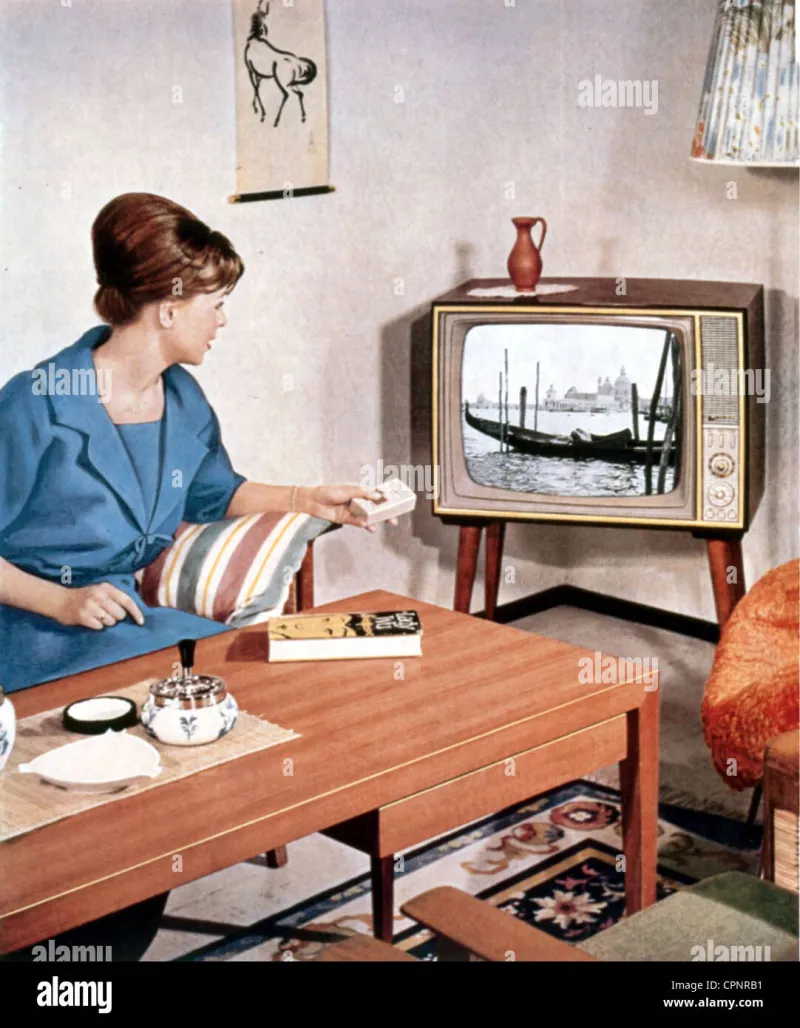
It's hard to overstate what central air conditioning did to American outdoor life. Before it became standard in most homes — a transition that happened largely between the 1960s and 1980s — the outdoors was simply more comfortable than the indoors during summer. You went outside because inside was hot. The backyard wasn't a choice; it was the obvious place to be.
Once the interior of a house could be held at a steady 72 degrees regardless of what was happening outside, the calculus shifted completely. Suddenly, going out into 90-degree humidity required a decision, a motivation, a reason. Staying in required nothing at all.
Children who grew up in air-conditioned homes developed a fundamentally different relationship with outdoor heat than their parents had. Discomfort, once a normal feature of summer, became optional — and once it was optional, most people opted out.
The Lawn as Performance
Around the same time, a different set of values began reshaping what the backyard was actually for. The rise of professional lawn care culture — fertilizer schedules, weed treatments, riding mowers, HOA guidelines — gradually transformed the backyard from a living space into a managed surface. The goal shifted from use to appearance.
A well-maintained lawn became a signal of respectability and property value. Bare patches where kids played wore into the turf. Footpaths from years of use looked messy. The optimized backyard was a green, even, undisturbed rectangle — which is to say, a backyard nobody was actually using.
Today, Americans spend an estimated $105 billion per year on lawn and garden care. Much of that goes toward maintaining spaces that function primarily as visual backdrops.
The Screen That Finished the Job
Smartphones and streaming completed what air conditioning and privacy fencing started. By the 2010s, the indoor environment wasn't just cooler than the backyard — it was more stimulating, more social, and more entertaining. The competition between outside and inside, which had never been entirely fair, became completely lopsided.
For kids especially, the shift was dramatic. A generation that grew up with tablets and YouTube had no framework for the unstructured outdoor afternoon. The backyard offered nothing to click on. Its entertainment required imagination, physical discomfort, and the willingness to be bored long enough for something interesting to happen. Those are skills that need to be practiced, and they weren't being practiced.
What the Quiet Costs
The loss of the active backyard is partly about childhood and partly about community. Neighbors who never see each other over a fence don't become neighbors in any meaningful sense. Streets where kids don't play outside don't develop the informal adult surveillance network that once made suburban blocks genuinely safe. The social fabric that the backyard supported wasn't visible until it was gone.
There's also something worth naming about spontaneity. The backyard at its best was a space with no agenda. You went out there and figured it out. That kind of unstructured time — for kids and adults alike — turns out to be harder to find than anyone anticipated when we all moved inside.
The grass is still there. It's just that nobody's sitting on it anymore.