Hurry Up and Wait: What We Lost When the World Stopped Making Us Sit Still
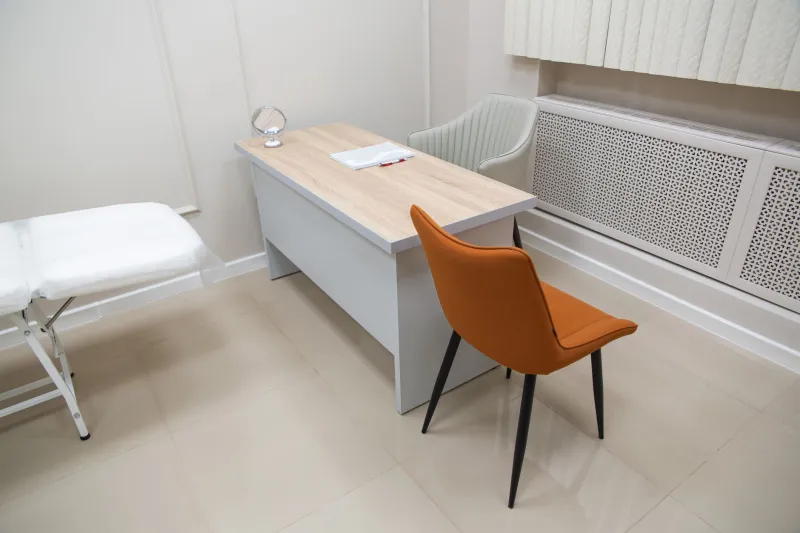
There's a particular smell that belongs to waiting rooms. Slightly stale air, a hint of whatever cleaning product the custodial staff uses, maybe a trace of old coffee from a machine nobody's restocked in two days. If you grew up in America before smartphones, you know exactly what that smell means: you're not going anywhere for a while, and you might as well accept it.
Waiting used to be non-negotiable. You went to the DMV and you waited. You went to the pediatrician and you waited. You sat in the Social Security office under fluorescent lights that hummed at a frequency designed, it seemed, to make time feel even slower. Nobody sent you a text when your number was coming up. Nobody offered a virtual queue. You sat, and you stared, and you flipped through a magazine from eight months ago, and that was the whole arrangement.
The Waiting Room as a Social Ecosystem
Here's the thing nobody talks about: those rooms were alive in a strange way. You'd end up next to a retired schoolteacher who wanted to tell you about her hip replacement. You'd catch eyes with a toddler across the aisle who thought peek-a-boo was the funniest thing that had ever happened. You'd overhear two strangers strike up a conversation about a local sports team and find yourself nodding along before you'd even realized you were listening.
The waiting room was an accidental community center. Nobody chose to be there, which meant nobody was performing. People were just... present. Bored and present, which turns out to be a surprisingly human combination.
The magazines helped too — not because they were good, but because they were there. You'd read a piece about kitchen remodeling trends you had zero interest in and somehow come away with three ideas. You'd flip to a crossword you'd never finish. You'd look at an advertisement for a car you'd never buy and think, for a moment, about what your life might look like if you drove something like that. It was undirected thinking, the kind your brain doesn't get to do anymore.
The Era of the Instant Answer
Somewhere along the way, America decided that waiting was a failure of systems rather than a feature of life. And honestly, the efficiency argument is real. Online appointment scheduling, digital check-ins, telemedicine, and DMV portals that let you renew your license without leaving your couch — these aren't small improvements. For working parents, for people without transportation, for anyone juggling three obligations before noon, the ability to handle bureaucracy from a phone is genuinely transformative.
But the solution to waiting wasn't just speed. It was also displacement. We didn't eliminate the idle time — we filled it. Now we wait for our coffee order while scrolling. We sit in the doctor's office antechamber with earbuds in. We stand in line at the pharmacy while texting. The pause is still there, technically, but we've stuffed it so full of input that it doesn't feel like a pause at all.
The result is that most Americans under 35 have never really experienced boredom in the old sense — that slow, slightly uncomfortable feeling of having nothing to do and no way to escape it. And increasingly, researchers who study attention and creativity are wondering whether that's actually a problem.
What Boredom Did for Your Brain
There's a growing body of thinking — not fringe stuff, but work from cognitive scientists and psychologists — suggesting that unstructured mental downtime is where a lot of important things happen. Problem-solving. Creative connection-making. The kind of low-grade reflection where you suddenly realize you've been feeling off about something for weeks and now you know why.
The waiting room forced that. Not because it was designed to, but because it had no alternative to offer. You couldn't be productive, so your brain did what brains do when they're left alone: it wandered. And wandering, it turns out, is not the same as wasting time.
There's also something worth saying about the social dimension. Those overheard conversations and accidental eye contacts and magazine-sharing moments were tiny stitches in the fabric of community life. They weren't meaningful in isolation, but they added up. They were reminders that you shared a world with other people who had their own appointments, their own worries, their own reasons for being stuck under those fluorescent lights.
We Optimized the Friction Away
We're not going back to three-hour DMV lines, and nobody's seriously arguing we should. But it's worth pausing — appropriately enough — to notice what the optimization erased along with the inconvenience.
We got efficiency. We got convenience. We got the ability to handle most of life's administrative burden without putting on pants. Those are real wins. But we also quietly dismantled one of the last remaining spaces where Americans of different backgrounds, ages, and circumstances were regularly thrown together with nothing to do but exist in the same room.
The waiting room wasn't comfortable. It wasn't fun. But it was, in its accidental way, one of the most democratic spaces in American life. Everyone waited. The guy in the suit waited next to the guy in the work boots. The anxious first-time mom waited next to the grandmother who'd been coming to this office for thirty years.
Now we wait alone, in our separate digital queues, staring at our own screens. It's faster. It's easier. And something about it feels a little lonelier than it probably should.