The Dog-Eared Magazine and the Idea You Never Knew You Needed
There's a particular kind of boredom that doesn't exist anymore. The kind where you're sitting in a plastic chair under fluorescent lights, your name hasn't been called in forty minutes, and the only thing between you and staring at the ceiling is a slightly damp copy of Smithsonian from March of last year.
You'd never have picked it up at a newsstand. You had no interest in the migratory patterns of Arctic terns or the restoration of a 16th-century Portuguese cathedral. But there you were — captive, curious, and slowly getting pulled in.
That was the waiting room. And it taught America things it didn't know it wanted to learn.
The Accidental Curriculum of the Waiting Room
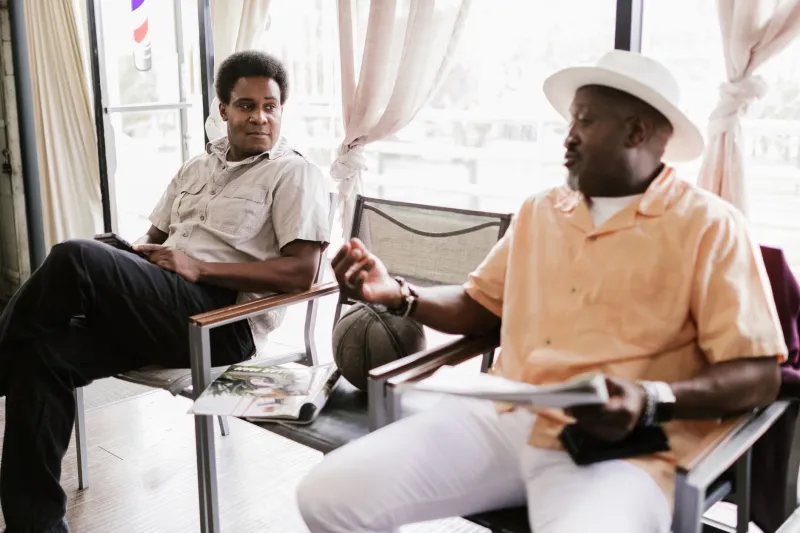
For most of the 20th century, waiting was just a fact of life. Doctor's offices, the DMV, airport gates, the barbershop, the unemployment office — all of them ran on the same unspoken social contract: you will sit here, you will wait, and you will have nothing to do but think or read.
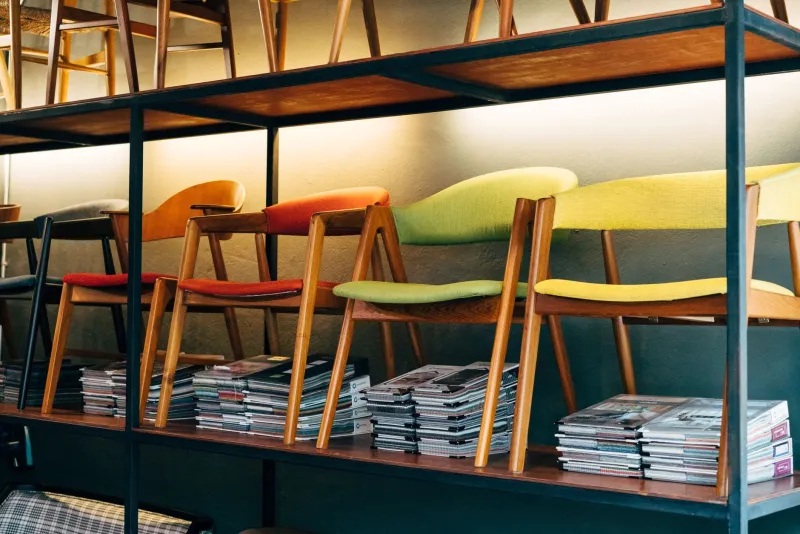
The magazine rack was the solution. It was never curated for you specifically. It was a random pile of whatever subscriptions the office had ordered, plus whatever patients had left behind, plus the occasional trade publication nobody could explain. You might flip through a Popular Mechanics, a People, a National Geographic, and a dental trade journal in a single forty-five-minute wait.
And something strange happened in that randomness. You'd stumble onto an article about the history of jazz, or a profile of a scientist working on coral reefs, or a long-form piece on the economic collapse of a Midwestern steel town — and it would genuinely interest you. Not because an algorithm decided it matched your preferences. Because you had nothing else to do and the writing was good.
This was serendipity by accident. Discovery by default. Education through boredom.
The Algorithm Knows What You Like. That's the Problem.
Fast forward to today. You sit in the same plastic chair under the same fluorescent lights. But now your phone is out before you've even found a seat. Within seconds, you're scrolling through content that a sophisticated system has spent years learning to tailor specifically to you.
You like hiking? Here's a hiking reel. You follow a few finance accounts? Here's another personal finance tip. You clicked on one article about the 1970s once? Here's a curated rabbit hole of 1970s nostalgia content.
It's frictionless. It's comfortable. And it's profoundly limiting.
The algorithm's entire job is to keep you engaged by showing you things you already like. It has no interest in showing you the Arctic tern article. That's not what you clicked on before. That's not your "type." So it quietly disappears from your world, along with every other topic that might have expanded how you see things.
The result is a kind of invisible narrowing. Your interests don't broaden — they deepen into grooves. You become very well-informed about a small number of things and increasingly unaware that entire categories of human knowledge and experience exist just outside your feed.
What Boredom Actually Did For Us
Psychologists have been quietly making this case for years. Unstructured downtime — real boredom, the uncomfortable kind — turns out to be one of the conditions most likely to produce creative thinking and unexpected connections. When your brain isn't being fed input, it starts generating its own. It wanders. It connects dots that wouldn't otherwise meet.
The waiting room magazine was a bridge between pure boredom and passive stimulation. It gave your brain just enough material to work with while still leaving room for your own thoughts to form around it. You'd read something, look up, stare at the middle distance for a moment, and think: huh, I never considered that before.
That pause — that moment of genuine surprise at an idea — is increasingly rare in a world where the next piece of content is already loading before you've finished the current one.
The Waiting That Connected Strangers
There's another dimension to this that rarely gets mentioned: the social one.
Waiting rooms used to be small, accidental communities. Someone would hold up a magazine and say, "Did you see this thing about the space shuttle?" A conversation would start. Two strangers who had nothing in common except being stuck in the same room at the same time would end up talking about something neither of them had planned to discuss that morning.
The shared magazine rack was common ground. Everyone had access to the same random pile. That created an odd kind of equality — the retired teacher and the college kid both flipping through the same issue of Life, both potentially landing on the same article, both having a reaction to it.
Now we sit in the same rooms with our own private feeds, each of us in a completely separate informational universe. We're together but not really sharing anything.
We Optimized the Waiting. We Lost the Wandering.
There's nothing wrong with personalization, in principle. The ability to find exactly what you're looking for, instantly, is genuinely useful. But something real was lost when we turned every idle moment into an optimized content experience.
We lost the accidental discovery. The random detour. The article about something you'd never have Googled but ended up thinking about for three days.
We lost the experience of being bored enough to pay attention to something unfamiliar — and finding out, to your own surprise, that you cared about it.
The waiting room magazine stack wasn't efficient. It wasn't personalized. It was a little chaotic and often out of date. But it introduced millions of Americans to ideas, places, people, and stories that their own preferences never would have surfaced.
Maybe the algorithm is smarter than a stack of dog-eared magazines. But smart and expansive aren't the same thing. And in optimizing away our boredom, we may have also optimized away one of the quieter engines of curiosity that kept us a little more open to the world than we realized.