The Dark Was the Point: What We Gave Up When We Brought Our Phones Into the Theater
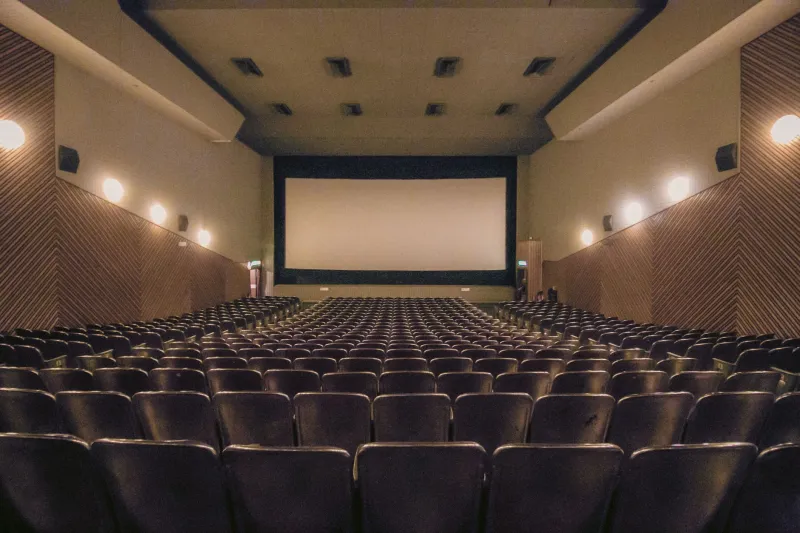
There was a specific kind of silence that used to fill a movie theater right before the film started. Not the silence of people ignoring each other — the silence of people choosing to be present. The lights went down slowly. The curtain, if there was one, parted. And for the next two hours, the outside world simply ceased to exist.
That experience — genuinely, completely disappearing into a story — is mostly gone now. And we barely noticed it leave.
When Going to the Movies Was Actually Going Somewhere
For most of the twentieth century, the movie theater wasn't just a place to watch a film. It was a destination with its own rituals. You got dressed for it. You arrived early enough to find a good seat, which meant scouting the room, not selecting a row on an app. You bought popcorn from a person behind a counter who scooped it fresh. The trailers were a shared experience — people leaned over and whispered that looks good to whoever was next to them.
And then the movie started, and everyone went quiet. Not because an automated message told them to silence their phones, but because the social contract of the room demanded it. The darkness wasn't just atmospheric. It was functional. It told you: you are here now, and only here.
In the 1930s and 40s, movie palaces — the grand, ornate theaters that dotted American downtowns — were designed specifically to make you feel like you had stepped into another world. High ceilings, plush seats, elaborate décor. The architecture itself was part of the escape. Going to the movies was an event, and the building made sure you knew it.
Even into the 1970s and 80s, when multiplexes replaced the grand palaces with more modest, efficient designs, the basic contract held. You went in. You watched. You came out changed, or moved, or at least entertained in a way that required your full attention.
The Slow Erosion of the Undivided Audience
The smartphone didn't ruin movie theaters overnight. It was gradual — a slow rewiring of audience expectations that happened in parallel with everything else the phone rewired.
First came texting. Then came the glow of screens during films. Then came the normalization of checking notifications, the quiet justification that I'll just look for a second. Theater chains responded with pre-show announcements that grew more elaborate and more desperate over the years. Some tried phone-locking pouches. Some installed Alamo Drafthouse-style strict no-phone policies that felt almost radical by comparison.
But the deeper shift wasn't just about phones in theaters. It was about what streaming did to our relationship with film itself.
When Netflix made it possible to pause, rewind, eat dinner, and check your email while watching a movie, it quietly redefined what watching a movie meant. The idea that a film demanded your complete, unbroken attention started to feel almost old-fashioned. Why sit through something you can't pause? Why commit to a fixed showtime? Why leave the house at all?
By the time the pandemic closed theaters entirely in 2020, many people discovered they didn't miss the experience as much as they thought they would. The content was still there, delivered straight to the couch. What was missing — the communal darkness, the shared silence, the total immersion — turned out to be harder to articulate than it was to lose.
What Immersion Actually Did for Us
Here's the thing that gets overlooked in conversations about streaming convenience versus theatrical experience: the forced disconnection of the old movie theater wasn't a limitation. It was the whole product.
When you couldn't check your phone — because it didn't exist, or because the social contract of the room made it unthinkable — you were pushed into a state of attention that's genuinely rare in modern life. Your nervous system settled. The story had room to actually land. You laughed harder because the whole room was laughing. You felt the tension more acutely because there was no escape valve.
Psychologists who study attention and narrative absorption have found that deep engagement with storytelling — the kind that requires sustained focus — produces measurable emotional and even empathetic benefits. The old movie theater, with its darkness and its silence, was basically an accidental attention chamber. Nobody designed it that way on purpose. It just worked.
Today's theater experience, even when people genuinely try to be present, exists in competition with the muscle memory of constant connectivity. Your phone is in your pocket. You know it's there. The habit of reaching for it during any moment of stillness is deeply ingrained. The darkness that used to feel like freedom now has to fight against years of trained reflex.
The Ritual Is What We Actually Bought a Ticket For
It's easy to frame the decline of theatrical immersion as a technology story — phones bad, streaming convenient, theaters struggling. But it's really a story about what rituals do for us and what happens when we trade them for efficiency.
The ritual of going to the movies — the planning, the arrival, the shared silence, the full surrender to the dark — wasn't incidental to the experience. It was the experience. The film was almost secondary. You were practicing the lost art of being somewhere completely, with other people, all pointed in the same direction.
Some theaters are trying to recapture this. Premium large-format screens, stricter audience policies, reserved seating that makes the whole thing feel more intentional. The Alamo Drafthouse built an entire brand identity around the idea that watching a movie is serious business and distractions won't be tolerated. The fact that this feels like a novelty says everything.
The movies haven't gotten worse. The stories are still there. What's harder to find is the context that made them hit differently — the room full of strangers who all agreed, without saying a word, to disappear together for a while.
That used to be the whole point. And for a long time, nobody needed to explain it.