When the NFL Was Just a Game: The Slow, Unstoppable Rise of Football's $20 Billion Machine
When the NFL Was Just a Game: The Slow, Unstoppable Rise of Football's $20 Billion Machine
In 1950, a professional football player's salary averaged somewhere around $5,000 a year. That's roughly $65,000 in today's dollars — a comfortable living, but not a fortune. Most players held off-season jobs. Some drove trucks. Some sold cars or insurance. A few coached high school teams on the side. The idea that playing professional football might be a standalone, year-round career that made a man wealthy beyond imagination was not yet a concept anyone had seriously entertained.
The stadiums they played in were often half-empty. The games were rarely broadcast nationally. The league itself was a loose, financially precarious organization that had already seen several franchises fold, merge, or relocate under economic pressure. Pro football existed. It had fans. But it was a regional curiosity, not a cultural institution — and certainly not a business.
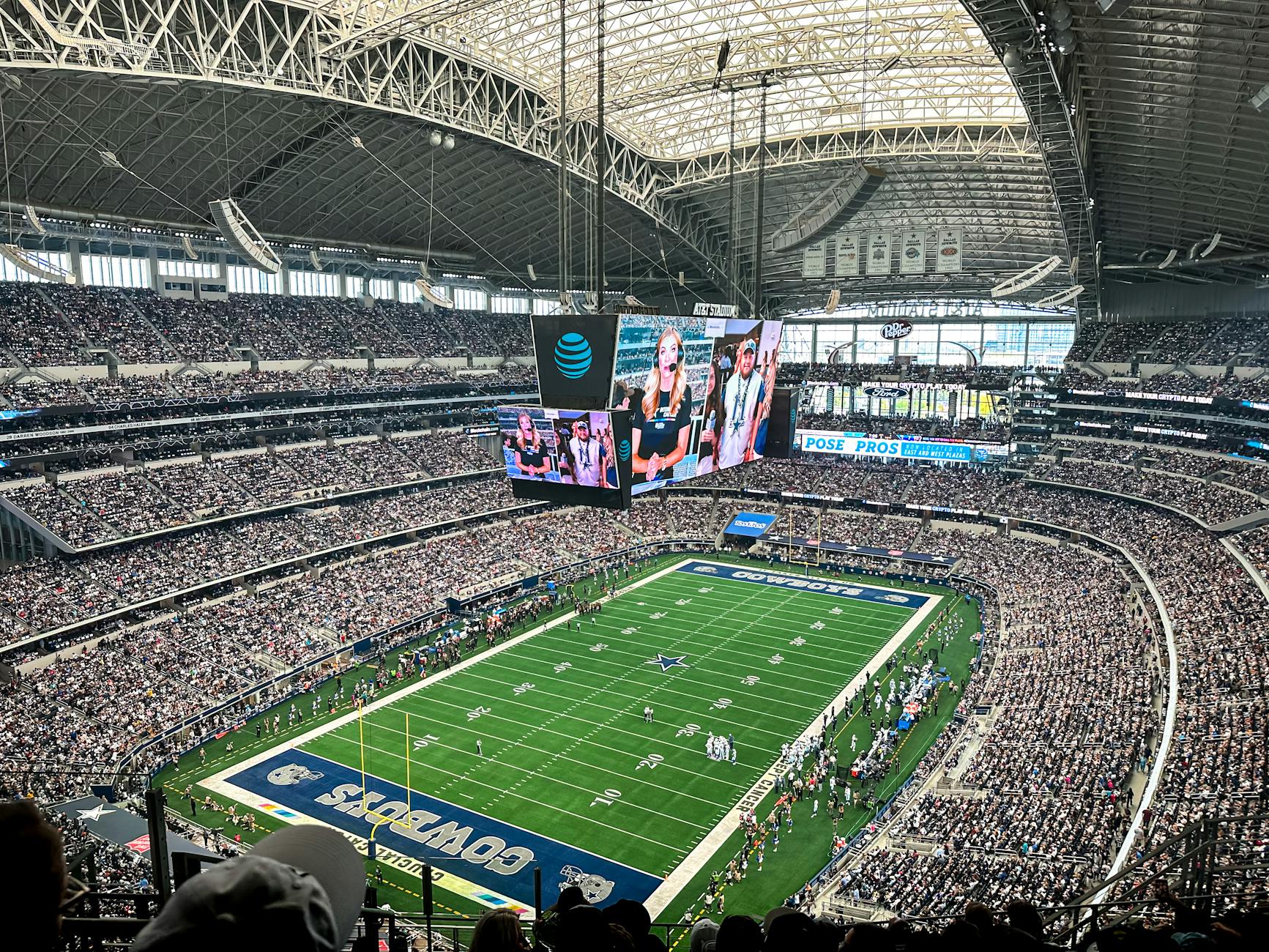
Today, the NFL generates roughly $20 billion in annual revenue. A single 30-second commercial during the Super Bowl costs north of $7 million. The cheapest franchise in the league is worth several billion dollars. Sunday has been functionally redefined in America. The distance between those two realities is one of the stranger journeys in the history of American entertainment.
The Game Before the Spectacle
The NFL was founded in 1920 in a Hupmobile dealership in Canton, Ohio — which is either charmingly humble or appropriately chaotic, depending on your perspective. The early decades were genuinely rough. Teams came and went. The Duluth Eskimos. The Pottsville Maroons. The Canton Bulldogs. Cities that no longer have professional football and never will again.
The sport had a devoted working-class following in cities like Chicago, Green Bay, and Pittsburgh, where football felt like an extension of industrial culture — physical, tough, rooted in community. But nationally? Baseball was the game. Boxing was the spectacle. Pro football was the thing you might catch on a Sunday afternoon if you had nothing else going on.
Players from this era were not celebrities. They were local guys, often from the same neighborhoods as the fans who watched them. After the final whistle, they went back to the same bars, the same diners, the same economic reality as everyone else. There was something genuinely democratic about it — and something economically fragile.
The Moment Everything Changed
Most serious football historians point to December 28, 1958, as the hinge point. The NFL Championship Game between the Baltimore Colts and the New York Giants went to sudden-death overtime — the first time that had ever happened in a title game — and it was broadcast nationally on NBC. An estimated 45 million people watched.
It was, by any measure, a great game. But what it really was, was a demonstration. It proved that professional football was made for television in a way that baseball, with its long pauses and horizontal geometry, simply wasn't. The camera loved the game. The game loved the camera back.
The league's leadership, particularly Commissioner Pete Rozelle, who took over in 1960, understood what that moment meant. Rozelle negotiated a landmark national television deal in 1962 that pooled TV revenues equally among all teams — a radical concept that prevented large-market clubs from dominating financially and kept smaller markets like Green Bay competitive. That revenue-sharing structure is still the foundation of the NFL's economic model today, and it's a big reason the league has remained more competitively balanced than, say, Major League Baseball.
The Layers That Built the Empire
Television was the foundation, but several other developments stacked on top of it to create the modern NFL.
Monday Night Football, which launched on ABC in 1970, transformed the game into a prime-time event — appointment viewing that competed directly with the most popular entertainment programming of the era. Howard Cosell and Frank Gifford weren't just calling plays. They were hosting a national social gathering that happened to involve football.
The Super Bowl, which began in 1967 as a somewhat awkward merger game between the NFL and the rival AFL, gradually became something else entirely. By the 1980s, it was less a football game than a cultural event that happened to have a football game inside it. The halftime show. The commercials. The parties. The Super Bowl became the one broadcast that people who don't watch football still watched.
Then fantasy sports arrived and rewired the relationship between fans and the game at a neurological level. When you have a roster of players scattered across multiple teams, you don't watch one game — you watch every game, tracking statistics in real time. Fantasy football, which went mainstream in the 1990s and exploded with the internet, turned casual fans into obsessives and gave the NFL an engagement mechanism that no other sport has matched.
Streaming and the NFL's recent media deals — which include arrangements with Amazon Prime, Netflix, and Peacock alongside traditional broadcast partners — have pushed the league's annual rights value into territory that would have seemed like science fiction to Pete Rozelle.
The Price of the Throne
It's worth noting what the transformation cost, not just what it built.
Ticket prices for a regular-season NFL game have risen so dramatically that the blue-collar fan base that originally built the sport's following in cities like Pittsburgh and Cleveland has been largely priced out of the stadium experience. The average NFL ticket now costs over $150 before fees, parking, or a $14 beer. The working-class Sunday ritual that once defined pro football's identity now plays out mostly on enormous televisions in living rooms and sports bars, not in the stands.
The players who once sold insurance in February are now year-round brand entities, training in state-of-the-art facilities and negotiating endorsement deals with global corporations. That's an improvement in many obvious ways. But something was lost when the player stopped being a guy from the neighborhood and became a celebrity who lives in a different zip code than the people wearing his jersey.
From Canton to the Cultural Center of the Universe
The NFL's ascent from a half-empty stadium in 1950 to the undisputed centerpiece of American popular culture happened within a single human lifetime. The people who watched the Colts and Giants play overtime in 1958 are still alive. The world those people were born into — where pro football was a local pastime, not a national obsession — is within living memory.
That's the thing about eras. They feel permanent while you're inside them. Then you look back and realize the whole thing shifted while you were watching the game.