The Card in Your Wallet That Meant You Were Serious About Learning Something
It was a small thing — a little paper or laminated card with your name on it, issued by the town or the city, usually free. But for a lot of Americans growing up in the mid-20th century, the library card was one of the most consequential objects they owned. It was, in the most literal sense, a pass to everything.
Today, the sum of human knowledge fits in a rectangle in your pocket. So why does it sometimes feel like we're learning less?
What the Library Actually Was
Before the internet, before search engines, before Wikipedia, the public library was the single most democratic institution in American intellectual life. It didn't matter if you grew up in a wealthy suburb or a rural county — if you had a library card, you had access to the same books, the same encyclopedias, the same newspapers on microfilm as anyone else. That was the deal. Knowledge was free, available, and equal.
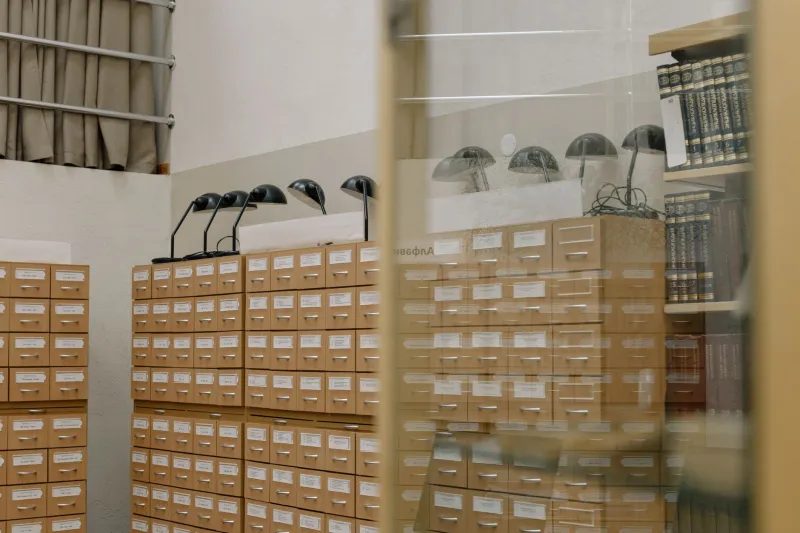
But access wasn't just about the collection. It was about the experience of going. You had to show up. You had to navigate the stacks — those long rows of shelved books organized by the Dewey Decimal System, a classification scheme that generations of American schoolchildren memorized like a second alphabet. You had to ask the reference librarian for help, and the reference librarian — often a quietly formidable person who seemed to have read everything — would walk you through it.
The process was slow by modern standards. Looking something up might take 20 minutes. Cross-referencing sources could fill an afternoon. And that slowness, it turns out, had consequences that were mostly positive.
The Serendipity Built Into the Stacks
Here's the thing about browsing physical shelves that no algorithm has successfully replicated: you found things you weren't looking for.
You'd come in to research the American Revolution for a school report, pull a book from the shelf, and notice the one next to it was about the economics of colonial trade. You'd flip through it out of mild curiosity. Two hours later, you'd leave with a fuller picture of history than any search query would have delivered — because the search query only answers the question you thought to ask.
Librarians called this "the adjacent shelf" phenomenon, though they didn't always use that term. The physical organization of knowledge meant that related ideas lived near each other, and proximity led to discovery. A kid researching astronomy might stumble into physics. A woman looking for a cookbook might find herself reading about the history of American agriculture. The library rewarded wandering in a way that felt almost designed — because in a sense, it was.
Digital search doesn't work that way. It's optimized for precision, not exploration. You type in a question, you get an answer. Efficient, fast, and remarkably narrow.
What Google Changed (and What It Didn't Tell You)
The internet didn't just make information faster — it made it feel abundant in a way that changed how we relate to learning itself. When answers are a few keystrokes away, the act of seeking them feels almost trivial. Why spend 40 minutes in the stacks when you can read the Wikipedia summary in 90 seconds?
The problem is that the 90-second version and the 40-minute version are not the same experience, and they don't produce the same outcomes.
Search engines, for all their power, are not neutral. They're shaped by algorithms that prioritize relevance — meaning they show you what their systems predict you want to see, based on your history, your location, your previous behavior. The result is a kind of intellectual feedback loop. You search for things that confirm your existing interests. The algorithm learns your interests. It surfaces more of the same. Over time, the circle of what you encounter gets quietly smaller, even as the universe of available information gets larger.
The library had no algorithm. It had no idea what you'd looked up before. It simply contained everything it could afford to stock, arranged logically, and let you loose in it.
The Economics of Free Knowledge
There's also a financial dimension here worth noting. The public library was — and still is — one of the great unexamined bargains in American civic life. Funded by property taxes and municipal budgets, it offered every citizen access to research tools, professional references, legal guides, medical texts, and literary archives that would cost hundreds of dollars to replicate privately.
For working-class families, the library wasn't a nice-to-have. It was the only way a kid from a modest household could access the same research materials as a kid whose parents had bookshelves full of encyclopedias. It leveled a playing field that the market had no interest in leveling on its own.
Today, the digital equivalent of that leveling is more complicated than it appears. Yes, Google is free. But not all information online is free — academic journals sit behind expensive paywalls, quality journalism is increasingly subscription-based, and the genuinely reliable sources are often the ones that cost money. The "free internet" is, in many cases, free in the way that free TV was free: supported by advertising, shaped by commercial interests, and optimized to keep you engaged rather than informed.
The library asked nothing of you except to return the books on time.
The Ritual That Made Knowledge Feel Worth Having
Maybe the most underappreciated thing about the library era was the intentionality it required. You didn't casually look something up. You made a trip. You set aside time. You engaged with the physical act of research — pulling books, scanning indexes, taking notes by hand. The effort itself signaled that the knowledge mattered.
There's a psychological principle at work here: we tend to value things we work for more than things that come easily. The harder-won answer sticks differently than the instant one. The book you carried home, read carefully, and returned two weeks later left a different kind of mark than the article you skimmed on your phone and never thought about again.
Library cards still exist. Most public libraries are still open, still free, still staffed by people who know things. Usage has declined steadily for years, but the institution hasn't disappeared. It's just been quietly overshadowed by something faster.
Faster isn't always the same as better. Sometimes the long way around was the whole point of the journey.