Pop the Hood and Fix It Yourself: When Cars Were Machines Instead of Computers
The Saturday Morning Ritual
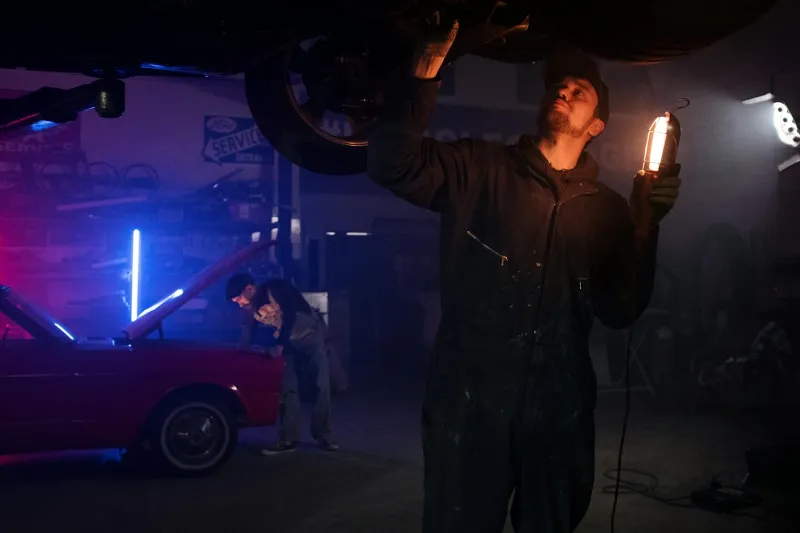
Jack Murphy spent most Saturdays under the hood of something. His 1969 Camaro, his wife's Buick, the neighbor's pickup that was making "that noise" again. Armed with a basic socket set, a Chilton's manual, and thirty years of tinkering experience, Jack could diagnose most problems by sound and fix them with parts from the local NAPA store.
His garage was a neighborhood institution. Kids learned to change oil by watching Jack work. Teenagers brought their first cars for his unofficial inspection. When something broke, the question wasn't whether to call a mechanic — it was whether Jack had time to take a look.
Jack's grandson owns a 2023 Honda Civic that he's never opened the hood on. Not because he's lazy or uninterested, but because there's literally nothing under there he can understand, let alone fix.
 Photo: 2023 Honda Civic, via platform.cstatic-images.com
When Engines Had Personalities
The cars of Jack's era were mechanical puzzles with knowable solutions. A 350 small-block Chevy engine had maybe 200 moving parts, most of them visible and accessible. The carburetor mixed air and fuel through physics you could see. The ignition system used points and condensers you could adjust with a feeler gauge. When something went wrong, you could usually spot the problem with your eyes.
Diagnosing issues was part science, part art. An experienced mechanic could identify a worn timing chain by the sound of the engine, spot a bad valve by watching exhaust smoke, or diagnose carburetor problems by how the engine responded to throttle input. These skills passed from father to son, from mechanic to apprentice, creating a vast network of automotive knowledge.
The Shade Tree Mechanic Network
Every neighborhood had its Jack Murphy — the guy who understood cars and was willing to help. These informal mechanics weren't necessarily professionals, but they'd learned by doing, accumulated tools over decades, and took pride in solving problems that stumped others.
The social aspect was as important as the mechanical knowledge. Working on cars was a communal activity. Kids learned by holding flashlights and fetching tools. Neighbors shared expertise, borrowed equipment, and helped with heavy lifting. The driveway became a classroom where practical knowledge transferred naturally from one generation to the next.
The Chilton's Manual Era
Before YouTube tutorials, there were Chilton's and Haynes repair manuals — thick paperback books with exploded diagrams, step-by-step instructions, and troubleshooting charts. These manuals assumed that ordinary people could and should fix their own cars with basic tools and common sense.
The instructions were refreshingly direct: "Remove the six bolts holding the valve cover. Clean the gasket surface. Install the new gasket. Torque bolts to 15 foot-pounds in a crisscross pattern." No special tools required, no computer diagnostics needed, no dealer-only parts.
A motivated teenager could rebuild an entire engine following a Chilton's manual, learning fundamental mechanical principles that applied to everything from lawnmowers to motorcycles.
The Parts Store Philosophy
Local auto parts stores were staffed by people who actually knew what they were selling. Walk into a NAPA or CarQuest with a description of your problem, and the counterperson could usually diagnose the issue and hand you the right part. These weren't retail clerks reading from computer screens — they were mechanics and car enthusiasts who understood how things worked.
Parts were also standardized and interchangeable. A water pump for a 1975 Chevy 350 would work in dozens of different vehicles. Brake pads came in a handful of common sizes. Spark plugs were universal. This standardization made repairs cheaper and knowledge more transferable.
The Computer Revolution
Everything changed when cars became computers. Modern vehicles contain 50-100 electronic control units, each running millions of lines of code. The engine management system alone processes hundreds of sensor inputs thousands of times per second, adjusting fuel mixture, ignition timing, and emissions controls in real-time.
This complexity brought tremendous benefits — better fuel economy, lower emissions, improved reliability, enhanced safety. But it also created a new barrier between car owners and their vehicles. You can't diagnose a malfunctioning oxygen sensor with your eyes and ears. You need a $5,000 diagnostic computer and software that costs thousands more.
The Sealed System Problem
Modern cars are designed as sealed systems where user intervention is neither expected nor wanted. Engine compartments are packed with plastic covers hiding the actual mechanical components. Critical fluids are "lifetime" and supposedly never need changing. Software controls everything from engine timing to door locks, and that software is proprietary and encrypted.
This design philosophy treats car owners as consumers rather than operators. The assumption is that people want transportation, not mechanical engagement. Regular maintenance becomes a series of scheduled dealer visits rather than opportunities for learning and hands-on involvement.
When Right to Repair Became a Fight
The shift from mechanical to electronic systems created new power dynamics. Manufacturers could control repair by restricting access to diagnostic tools, service manuals, and replacement parts. Independent mechanics found themselves locked out of newer vehicles, unable to compete with dealer service departments that had exclusive access to proprietary systems.
Car owners lost the right to truly own their vehicles. You might hold the title, but you can't modify the software, access diagnostic data, or perform many repairs without manufacturer permission. This represents a fundamental shift from ownership to licensing that would have seemed absurd to Jack Murphy's generation.
The Knowledge Extinction
As cars became more complex and less accessible, mechanical knowledge began disappearing. Kids stopped learning basic automotive skills because there was nothing they could actually work on. High schools eliminated auto shop classes, seeing them as outdated in the computer age. The informal network of neighborhood mechanics gradually aged out without replacement.
This knowledge extinction happened remarkably quickly. In just two generations, we went from a society where most men and many women could perform basic car maintenance to one where changing a battery requires YouTube research and changing oil involves finding a service center.
The Cost of Complexity
Modern automotive complexity created new financial burdens for car owners. Repairs that once cost $50 in parts and an afternoon of work now require dealer visits costing hundreds or thousands of dollars. The diagnostic process alone often costs more than the entire repair used to.
More significantly, the relationship between people and their cars fundamentally changed. Cars became appliances rather than machines — things you use until they break, then replace rather than repair. The satisfaction of understanding and maintaining your own equipment disappeared for most Americans.
What We Lost
The transition from mechanical to electronic cars eliminated more than just the ability to fix things yourself. It ended a form of practical education that taught problem-solving, mechanical reasoning, and the satisfaction of making things work. Kids learned physics by watching pistons move, chemistry by understanding combustion, and engineering by seeing how hundreds of components worked together.
Working on cars also provided a different kind of intelligence — the ability to diagnose problems through observation, to understand cause and effect in mechanical systems, to take pride in craftsmanship and attention to detail. These skills transferred to other areas of life, creating people who were comfortable with tools, confident about tackling problems, and understanding of how things actually work.
The Electric Future
Electric vehicles promise to simplify automotive technology in some ways — fewer moving parts, less frequent maintenance, more reliable operation. But they also represent the ultimate sealed system, with high-voltage components that are genuinely dangerous for amateur mechanics and software systems even more complex than current internal combustion engines.
The question isn't whether we can return to the mechanical simplicity of the past — we can't and probably shouldn't. But we can ask whether we want to continue down a path where ordinary people become completely disconnected from the machines that dominate their lives.
The Garage as Cathedral
Jack Murphy's garage represented something important about American culture — the belief that things should be understandable, fixable, and improvable by ordinary people with basic tools and determination. It was a place where knowledge was shared freely, where problems were solved through experimentation and persistence, where the satisfaction of making something work created bonds between neighbors and generations.
We've gained tremendous technological capability by making cars into computers, but we've lost something essential about human agency and mechanical understanding. The challenge is finding ways to preserve the benefits of modern technology while maintaining some connection to the fundamental satisfaction of knowing how things work and being able to fix them when they break.
The teenager who can rebuild an engine may be extinct, but the human desire to understand, modify, and repair remains as strong as ever. The question is whether we'll create space for that desire in an increasingly complex technological world.