Bleachers Used to Be for Everyone: The Hidden Class System That Took Over American Stadiums
Bleachers Used to Be for Everyone: The Hidden Class System That Took Over American Stadiums
There's a photograph somewhere in the American archive that captures a moment we've almost entirely forgotten: a packed baseball stadium in 1962, bleachers overflowing with families in their Sunday best, kids clutching hot dogs, the whole scene radiating an almost quaint sense of accessibility. A bleacher seat cost 75 cents. A hot dog was a dime. A soda, a nickel. For under five dollars, a family could spend an entire afternoon watching Mickey Mantle or Willie Mays.
That world is gone. Not gradually erased, but systematically dismantled and replaced with something almost unrecognizable to anyone who experienced it.
The $5 Afternoon That No Longer Exists
Let's do the math the way your grandfather would understand it. In 1965, the median household income in America was roughly $7,700 a year. A decent bleacher seat at Yankee Stadium ran about $1.50. A beer was 50 cents. A program cost a quarter. For $5, a working-class family—a factory worker, a teacher, a postal clerk—could take their kids to see the Yankees play. That $5 represented less than 0.1 percent of their annual income.
Today, the median household income hovers around $75,000. A bleacher seat at Yankee Stadium starts at $50 and climbs quickly. A beer costs $14. A hot dog, $8. Parking, if you drive, adds another $40 minimum. A family of four is now looking at $300 to $400 for the experience. That's roughly half a percent of median household income—and that's being conservative.
But the numbers don't capture what was actually lost.
When the Ballpark Was Democracy
The postwar stadium wasn't just a place to watch sports. It was one of the few spaces where Americans from different economic backgrounds actually sat next to each other. A banker's family might sit three rows over from a steelworker's. Kids from different neighborhoods, different school districts, different circumstances, all cheering for the same team. The bleachers, especially, were where the real cross-section of America gathered.
There was something almost radical about that accessibility. Sports weren't yet a luxury good. They were woven into the fabric of regular American life—the way movies and radio had been a decade earlier.
The shift began subtly in the 1980s and accelerated through the 1990s. Stadium owners realized they could extract far more value from their venues. Corporate boxes appeared—premium seating for companies to entertain clients. Luxury suites commanded $10,000 to $50,000 per game. Teams discovered that wealthy patrons would pay exponentially more than working-class fans, and the math became irresistible.
The Monetization of Everything
It wasn't just ticket prices that changed. Every revenue stream exploded. Dynamic pricing—the algorithmic equivalent of surge pricing—meant that popular games or rival matchups could cost two or three times more than less-attended contests. Seat licenses became a thing: you could pay thousands just for the right to buy tickets at face value. Secondary markets like StubHub and SeatGeek created a speculative market where tickets became financial instruments, with bots and resellers scooping up inventory before actual fans even had a chance.
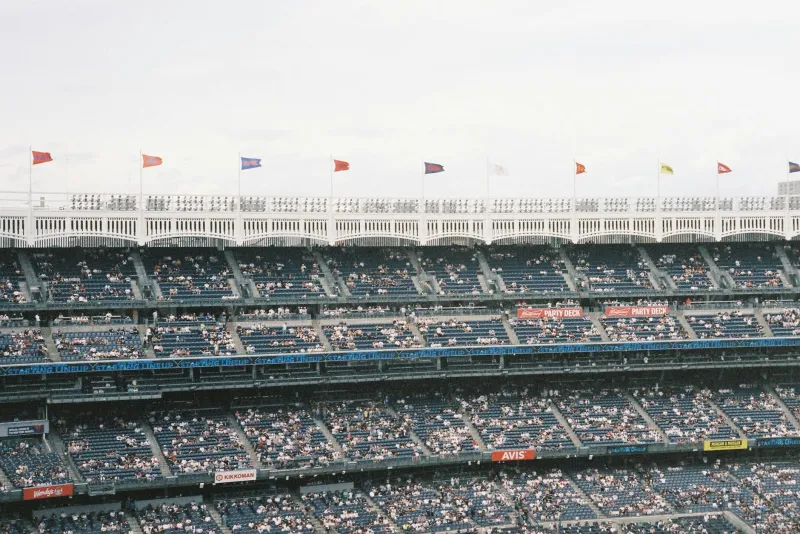
The stadium itself became a different kind of experience. Premium seating areas expanded, pushing working-class sections further and further away. The sightlines got worse. The walk got longer. The message, implicit but unmistakable, was this: you don't belong here anymore.
Teams began catering almost exclusively to corporate clients and affluent season-ticket holders. The experience became stratified in ways that mirrored the broader economic inequality of American life. You could now purchase a $500 seat with premium food service, a climate-controlled club lounge, and a view that made the game feel intimate. Or you could sit in the upper deck, farther from the action than ever, for a fraction of that price—if you could justify the expense at all.
What Happened to the Families?
The consequence has been quiet but profound. Attendance at major league games has declined among working-class families. Kids who might have grown up as passionate baseball fans—who might have inherited that love from their parents and grandparents—never got the chance. The ballpark, which once served as a cultural institution that transcended class, became just another consumer experience reserved for those with disposable income.
A 2023 survey found that families making under $50,000 a year attended live sports events at roughly one-third the rate of families earning over $100,000. The gap has widened steadily for two decades. The stadium that used to be a shared American experience is now a bifurcated one—premium entertainment for some, an increasingly distant memory for others.
Teams will point to their bottom lines. Attendance may be down, but revenue is up. From a pure financial perspective, the strategy worked. Fewer butts in seats, but much more money per butt.
The Invisible Toll
What's harder to quantify is what we've lost culturally. There's no spreadsheet for the grandfather who can't take his grandkids to their first game. There's no line item for the kid who grows up without ever experiencing the magic of a stadium full of strangers united in common passion. There's no balance sheet entry for the erosion of shared American spaces.
The postwar stadium was, in hindsight, an anomaly—a brief moment when popular entertainment was genuinely popular, when the working class didn't have to sacrifice to participate in culture. It was never going to last forever. But the speed and thoroughness of its replacement with an experience designed for the affluent has left a mark on American life that we're only beginning to understand.
Your grandfather didn't need to be rich to be a fan. Your kids might.