The Century When Moving Meant Something: How America Lost the Art of Getting There
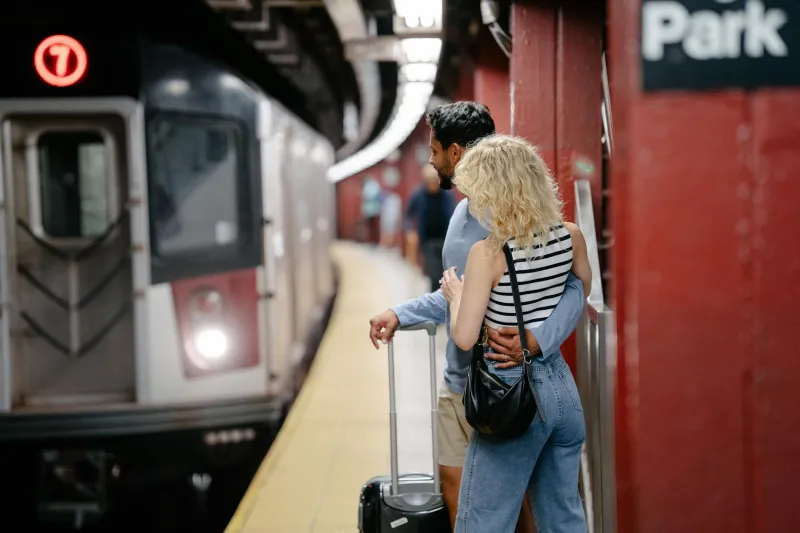
When Traveling Was Part of the Adventure
Picture this: It's 1955, and your grandmother is boarding the City of New Orleans in Chicago, bound for Memphis. She's wearing her good dress and carrying a small suitcase. The porter tips his hat, helps her to a comfortable seat with actual legroom, and she settles in for what she considers a perfectly normal way to travel 300 miles. She'll arrive refreshed, having watched the countryside roll by, maybe struck up a conversation with the businessman across the aisle, and enjoyed a proper meal in the dining car.
Fast-forward to today: that same trip requires either a grueling six-hour drive through increasingly congested highways or a flight that, between security lines, delays, and connections, takes nearly as long as the train would have — except you'll arrive stressed, dehydrated, and vaguely violated by the experience.
The Golden Age That Actually Existed
Contrary to popular belief, America's rail network wasn't just some romantic fantasy from old movies. By the 1950s, passenger trains connected virtually every city and town worth connecting. You could board a train in small-town Kansas and step off in downtown San Francisco. The Super Chief ran from Chicago to Los Angeles in luxury that made flying look primitive. The Broadway Limited whisked passengers from New York to Chicago overnight in sleeping cars that put today's first-class airline seats to shame.
More importantly, these trains ran frequently and affordably. A coach ticket from New York to Chicago cost about $25 in 1950 — roughly $300 in today's money. Compare that to what Amtrak charges for the same route today (when it's even available), and you'll understand why your great-grandfather could afford to visit relatives across the country without taking out a second mortgage.
The Great American Mistake
So what happened? The story usually told is that Americans fell in love with cars and planes, abandoning trains by choice. But that's not quite right. The truth is more complicated and more tragic.
In the 1950s and 60s, federal policy systematically favored highways and airports while starving passenger rail of investment. The Interstate Highway System received massive federal funding — $500 billion in today's dollars. Commercial aviation got subsidies, air traffic control systems, and airports built with public money. Meanwhile, privately-owned railroads were expected to maintain their own tracks and stations while competing against heavily subsidized alternatives.
It was like forcing someone to run a race while their competitors got motorcycles.
When Flying Meant Something Too
Even air travel used to be fundamentally different. In 1960, flying was genuinely special — expensive, yes, but also genuinely luxurious. Passengers dressed up. Airlines served real meals on real plates. Flight attendants were highly trained professionals, not safety monitors managing cattle cars.
A coast-to-coast flight cost about $4,500 in today's money, which meant most Americans flew rarely, if ever. But when they did, it felt like an event. Compare that to today's experience: we can fly from New York to Los Angeles for $200, but we'll be crammed into seats designed for people from 1960, charged extra for everything from bags to water, and treated like potential terrorists from the moment we enter the airport.
The Death of Distance
Here's what we lost in the transition: the experience of crossing America. When you traveled by train, you felt the vastness of the country. You watched wheat fields give way to mountains, desert transform into farmland. You understood, in your bones, what "from sea to shining sea" actually meant.
Flying collapsed that experience into a few hours of pressurized discomfort punctuated by glimpses of clouds. Driving turned it into a blur of highway rest stops and chain restaurants. We gained speed but lost the journey itself.
The Ripple Effects Nobody Saw Coming
The decline of passenger rail did more than just change how we travel — it reshaped the American landscape. Small towns that once thrived as railroad stops withered when the trains stopped coming. City centers, built around grand train stations, hollowed out as transportation moved to suburban airports and highway interchanges.
Meanwhile, countries that maintained their rail networks — Japan, much of Europe — kept their city centers vibrant and their small towns connected. They can travel from urban core to urban core without the hassle of airports or the isolation of highways.
What We're Left With
Today, America has the world's most extensive highway system and the busiest airspace, yet somehow traveling feels harder than ever. Highways are clogged with traffic. Airports are stress factories. And for most of the country, passenger rail simply doesn't exist as a real option.
We built a transportation system optimized for speed and cost, but we forgot to optimize for the human experience. The result is a country where getting from here to there has become something to endure rather than enjoy — where the journey has been completely sacrificed to the destination.
Your grandmother's train may have been slower than today's flight, but she arrived having experienced something. Today, we arrive having survived something. That's not progress — that's forgetting what travel was supposed to feel like.