When Retirement Was a Promise, Not a Gamble
In 1980, if you worked for General Motors, IBM, or even your local school district for 30 years, you knew exactly how much money you'd receive every month in retirement. The calculation was straightforward: take your final salary, multiply it by your years of service and a predetermined percentage, and that's what you'd get until you died. No market crashes could touch it. No investment decisions required.
Walter Jenkins, who retired from Ford in 1985, received $1,847 per month for the rest of his life—equivalent to about $5,200 today. He didn't need to understand compound interest, asset allocation, or withdrawal rates. The company handled everything. Walter's job was to show up and work; Ford's job was to provide a dignified retirement.
This wasn't unusual—it was standard. In 1980, 84% of large companies offered defined-benefit pension plans. Workers contributed nothing to these plans; employers funded them entirely. The promise was simple and ironclad: work here long enough, and we'll take care of you when you're too old to work.
The Quiet Revolution Nobody Noticed
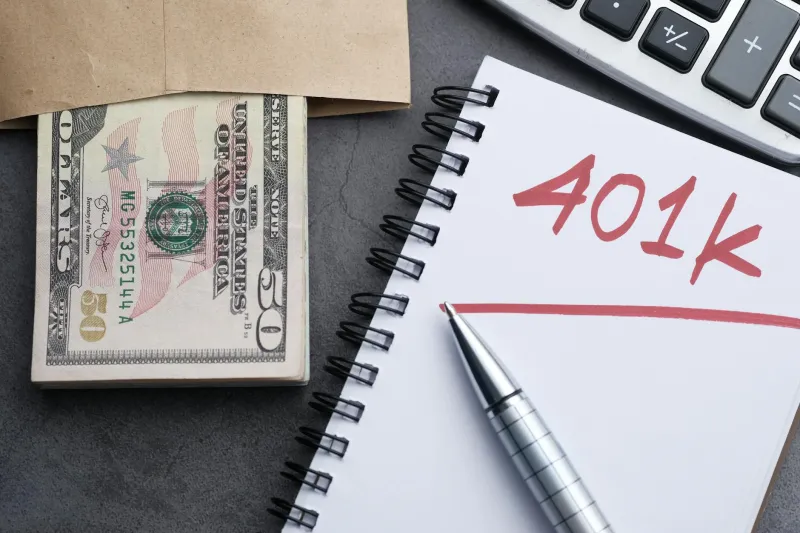
The shift began in 1978 when Congress passed a seemingly minor tax code revision called Section 401(k). Originally designed as a tax shelter for highly compensated executives, it would eventually become the primary retirement vehicle for most American workers. But in 1978, nobody predicted this outcome—least of all the workers whose pensions would disappear.
Employers quickly realized that 401(k) plans offered something pensions never could: predictable costs and zero long-term liability. Instead of promising specific benefits, companies could contribute a fixed amount each year and walk away. If the stock market crashed the year before you retired, that was your problem, not theirs.
The transition happened gradually, which made it less noticeable. Companies didn't eliminate pensions overnight; they simply stopped offering them to new hires. By 2020, only 15% of private-sector workers had access to traditional pensions. The great retirement promise had been quietly broken.
The New Math of Retirement
Consider two workers: Janet, who retired in 1990 with a traditional pension, and her daughter Michelle, retiring in 2024 with a 401(k). Janet worked as a secretary for the phone company for 32 years. Her pension pays $2,100 monthly for life, plus health insurance. She never worried about market volatility or withdrawal strategies.
Michelle, also a secretary but for a private company, has $180,000 in her 401(k) after 30 years of work. Following the standard 4% withdrawal rule, she can safely take out $7,200 per year—just $600 per month. To match her mother's pension income, Michelle would need $630,000 saved, more than three times what she actually has.
The numbers are even starker when adjusted for inflation. Janet's pension, in today's dollars, provides about $4,200 monthly. Michelle's 401(k) provides $600. Despite working the same job for the same length of time, Michelle's retirement income is one-seventh of her mother's.
The Participation Problem
The 401(k) system assumes workers will contribute consistently and invest wisely for decades. Reality tells a different story. According to the Federal Reserve, the median 401(k) balance for Americans nearing retirement is just $65,000. Half of workers have saved less than that.
Many employees don't participate at all. About 32% of eligible workers don't contribute to their company's 401(k) plan, often because they can't afford to reduce their take-home pay. Others contribute sporadically, stopping contributions during financial emergencies or job changes.
Even dedicated savers face challenges their parents never encountered. Market timing matters enormously when you're responsible for your own retirement security. Someone who retired in 2008, at the height of the financial crisis, might have seen their 401(k) balance cut in half just when they needed it most. Pension recipients, by contrast, received the same monthly check regardless of market conditions.
The Hidden Costs of Self-Directed Retirement
Managing a 401(k) requires financial expertise that most workers don't possess. Investment fees, often hidden in complex prospectuses, can consume 1-2% of account balances annually. Over a 30-year career, these fees can reduce retirement savings by $150,000 or more.
Pension plans, managed by professional investors handling billions of dollars, typically paid fees of 0.1-0.3%. They also benefited from economies of scale and institutional investment opportunities unavailable to individual investors. The shift to 401(k)s didn't just transfer risk from employers to employees—it made retirement more expensive for everyone.
Workers also bear the burden of investment decisions they're not trained to make. Studies show that most 401(k) participants make costly mistakes: they don't diversify properly, they panic during market downturns, or they become too conservative as they near retirement. These errors compound over time, further reducing retirement security.
The Employer's Perspective
From a corporate standpoint, the shift made perfect sense. Pensions created enormous long-term liabilities that could bankrupt companies if investment returns disappointed or employees lived longer than expected. General Motors, for instance, had pension obligations exceeding $100 billion at one point, contributing to its eventual bankruptcy.
401(k) plans offered predictability. If a company matches 50% of employee contributions up to 6% of salary, its maximum annual cost per worker is 3% of that person's wages. Compare that to pension plans, which could cost 15-20% of payroll and created obligations lasting decades beyond an employee's working years.
The timing was also fortuitous for employers. The 1980s and 1990s featured strong stock market returns, making 401(k) accounts appear successful. Workers felt wealthy watching their account balances grow, not realizing they were assuming risks their parents never faced.
What the Numbers Really Mean
The Employee Benefit Research Institute estimates that 57% of American workers are "not confident" they'll have enough money for a comfortable retirement. Among those nearing retirement, 28% have less than $1,000 saved. These aren't people who failed to plan—they're victims of a system that shifted enormous risks onto individuals without providing the tools or resources to manage those risks effectively.
Meanwhile, the few workers who still have pensions are doing comparatively well. Government employees, who largely retained traditional pensions, have median retirement savings three times higher than private-sector workers. The difference isn't work ethic or financial savvy—it's the security of guaranteed benefits.
The Road Back to Security
Some companies are recognizing the 401(k) system's limitations. IBM recently announced it would offer new employees a cash balance pension plan—a hybrid that provides more predictability than traditional 401(k)s. Several states have created automatic-enrollment retirement programs for workers whose employers don't offer plans.
But these efforts remain small compared to the scale of the problem. Most Americans will retire under the 401(k) system, which means most will face financial insecurity their parents never experienced. We've conducted a massive experiment in retirement policy, and the early results suggest we may have traded away something precious: the peace of mind that comes from knowing your working years will be rewarded with a secure retirement.
Your grandfather didn't need a financial advisor, a spreadsheet, or a prayer. He had a promise, backed by his employer and protected by law. Today's workers have something very different: the opportunity to succeed financially, and the very real possibility of failing catastrophically. Whether that trade-off was worth making may be the defining question of American retirement policy for generations to come.