One Ring for the Whole Block: The Jaw-Dropping Journey from Party Lines to the Supercomputer in Your Pocket
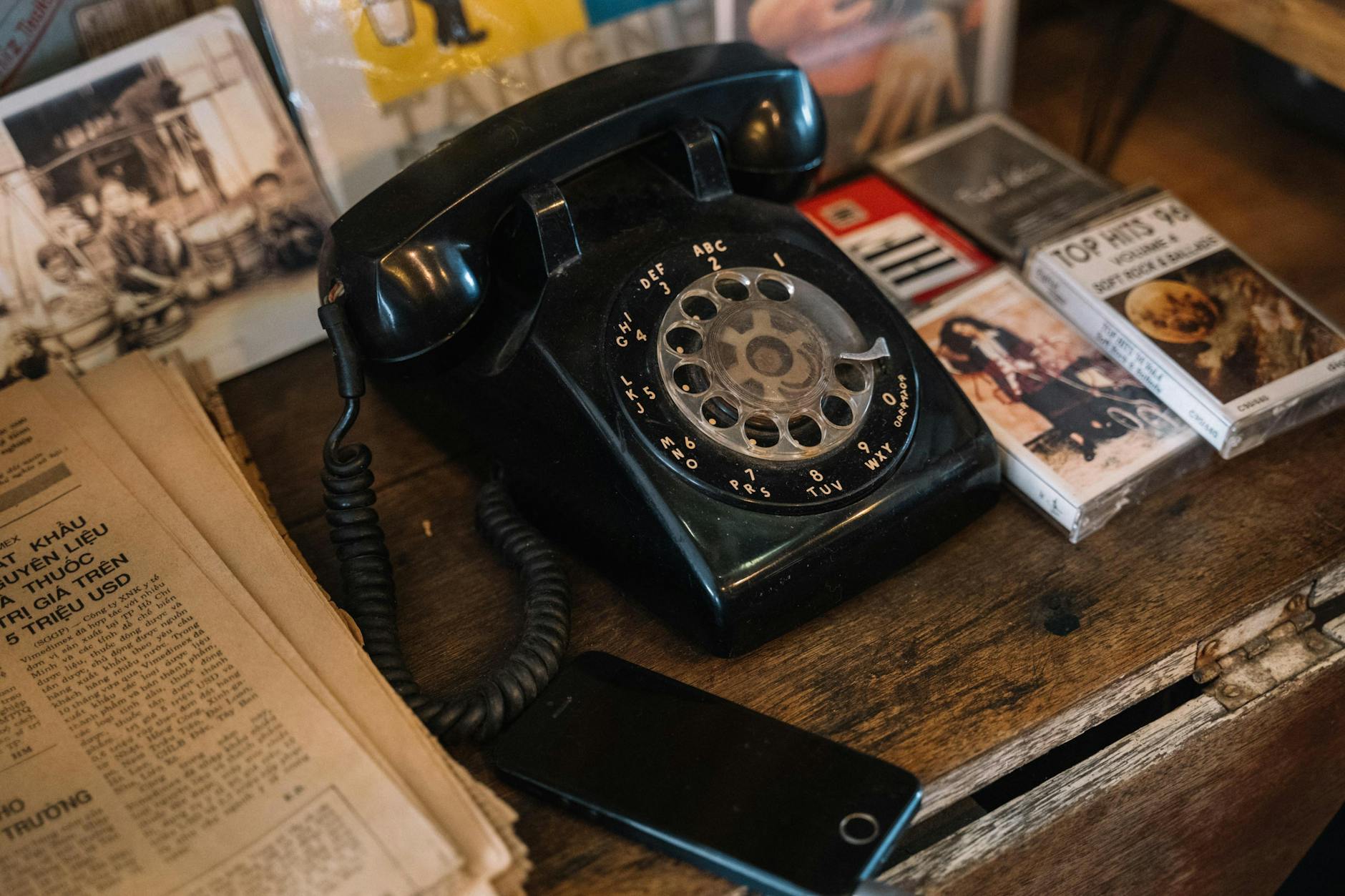
One Ring for the Whole Block: The Jaw-Dropping Journey from Party Lines to the Supercomputer in Your Pocket
Picture this: you want to call your sister. You pick up the phone, and before you even dial, you hear two of your neighbors already mid-conversation. You wait. You try again later. When you finally get through, you keep it short — because long-distance calls cost real money, and everyone in the house knows it.
This wasn't the 1800s. This was suburban America in the 1950s and into the 1960s. And the leap from that world to the one where you can video call Tokyo for free while simultaneously streaming a movie and ordering dinner is one of the most dramatic transformations in human history — compressed into a single lifetime.
When the Phone Was a Shared Resource
The party line was a fixture of American life well into the mid-twentieth century. Rural and suburban households across the country shared telephone lines with anywhere from two to a dozen neighbors, each assigned a distinct ring pattern so they'd know which calls were theirs. Privacy was essentially a courtesy, not a guarantee. Nosy neighbors were a known hazard of the system.
For millions of Americans, this was simply how communication worked. The telephone was a utility, like water or electricity — something you used when necessary, not something you carried around or stared at for hours.
Long-distance calling was in a category of its own. In the 1950s, a three-minute call from New York to Los Angeles cost the equivalent of nearly $20 in today's money. Families scheduled calls. They wrote letters. They sent telegrams for urgency. Reaching someone far away required planning, expense, and a certain degree of ceremony.
The Era of the Household Phone — and Its Unwritten Rules
By the 1970s, private lines had become standard for most urban and suburban households, and the telephone had migrated from the hallway to the kitchen to, eventually, every room in the house. But it was still tethered. Literally. The cord was part of the experience.
Teenagers stretched those cords to their absolute limit for privacy. Families argued over who was tying up the line. And if you weren't home, there was simply no way to reach you — a concept that feels almost surreal to anyone who grew up with a cell phone.
The answering machine, which became widely affordable in the late 1970s and exploded in popularity through the 1980s, was genuinely revolutionary. The idea that you could leave a message and someone would hear it later — without both parties needing to be available at the same moment — changed the rhythm of daily communication in ways that were quietly enormous.
Then came the pager. Doctors had them first, then drug dealers, then teenagers. Being reachable anywhere, even if only by a number you had to find a payphone to return, felt like science fiction made real.
The Mobile Revolution — and How Fast It Actually Moved
Here's the part that tends to genuinely surprise people: the first commercial cellular phone call in the United States was made in 1983. The device used to make it — a Motorola DynaTAC — weighed nearly two pounds, cost $3,995 (roughly $12,000 in today's dollars), and offered about 30 minutes of talk time before the battery died.
For most of the 1980s and early 1990s, mobile phones were status symbols for executives and curiosities for everyone else. Mainstream adoption didn't really arrive until the late 1990s, when plans became affordable enough for middle-class families and the phones themselves shrank to something you could actually fit in a jacket pocket.
And then — within a single decade — everything accelerated beyond what anyone had predicted.
The first iPhone launched in 2007. Not even 20 years ago. Before that, "smartphones" existed in clunky form, but the idea of a device that combined a phone, a camera, a map, a music player, a web browser, and eventually access to nearly all of human knowledge in a glass rectangle that fits in your hand — that was still the stuff of Star Trek.
By 2024, roughly 97 percent of Americans own a cell phone of some kind, and about 90 percent carry a smartphone. The average American checks their phone around 144 times a day. We have moved from a world where reaching someone required planning and expense to one where being unreachable requires deliberate effort.
More Than Convenience — A Rewired Social Fabric
What's easy to miss in the gadget-by-gadget timeline is how profoundly each leap changed not just communication but the texture of everyday life.
Party lines created communities of shared information — and shared gossip. The household telephone made the nuclear family the primary unit of communication. Answering machines introduced asynchronous connection, decoupling the sender from the receiver. The mobile phone began dissolving the boundary between work and personal life. And the smartphone collapsed nearly every remaining wall between public and private, present and elsewhere, bored and entertained.
The generation that grew up waiting for their neighbor to get off the shared line before they could make a call is the same generation that now FaceTimes their grandchildren from a cruise ship in the Mediterranean. The distance between those two experiences — in time, in technology, in the basic assumptions about human connection — is almost impossible to fully comprehend.
And we're probably not done yet. We just tend not to notice how fast we're moving until we stop and look back.