The Mailbox Was America's First Internet: How We Lost the Network That Connected Every Home
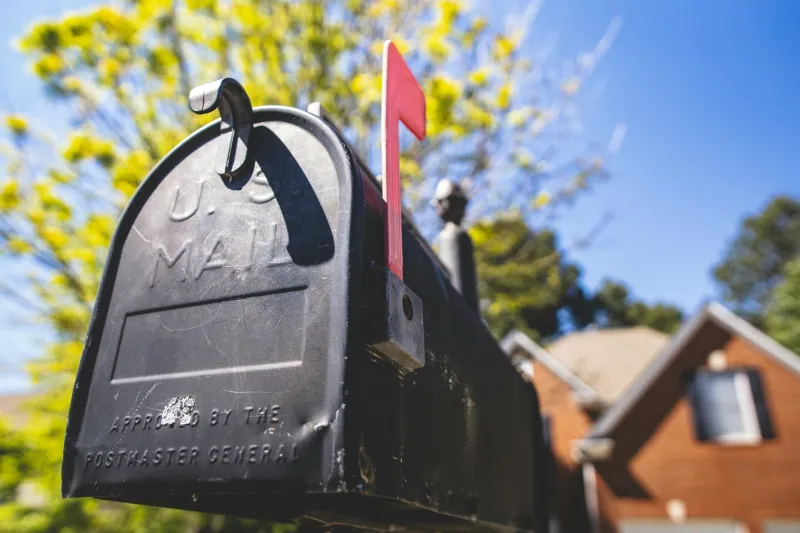
When Every Address Was an Access Point
Picture this: It's 1955, and your mailbox isn't just a receptacle for bills and catalogs. It's your connection to the entire world. Through that simple metal box, you could receive a live baby chick from Iowa, medicine from a pharmacy three states away, or a handwritten letter that took three days to cross the country but carried the full weight of someone's thoughts.
The United States Postal Service wasn't just a delivery system—it was America's first universal network. Every home, every farm, every business had an address, and that address was a guaranteed access point to a system that connected 180 million Americans with stunning reliability.
The Network That Delivered Everything
In the 1940s and 1950s, Americans mailed things that would horrify modern postal workers. Live animals were routine—baby chicks, bees, and even alligators traveled through the mail. Parents in rural areas regularly sent their children via mail to visit relatives, complete with postage stamps attached to their clothing. The practice was so common that postal regulations had to specifically address the proper handling of mailed children.
Prescription drugs flowed freely through the mail system. Your doctor would call in a prescription, the pharmacy would package it, and it would arrive at your door within days—no insurance hassles, no pharmacy chains, no questions asked. The mail was trusted with literal life-and-death deliveries.
But it wasn't just the unusual items that made the postal system remarkable. It was the everyday magic of connection. A letter mailed in the morning in Manhattan would reach Brooklyn by afternoon. Rural farmers could order seed catalogs and have them arrive within the week. Love letters crossed oceans, business deals crossed state lines, and family news crossed generations—all through a system that most Americans trusted more than their banks.
The Daily Ritual of Connection
The mail wasn't just delivered—it was anticipated. Families planned their days around mail delivery. Children ran to meet the mailman. Adults lingered by their mailboxes, chatting with neighbors who were doing the same thing. The arrival of mail was a social event, a moment when the outside world came to your doorstep.
Postal workers weren't just delivery people; they were community fixtures. They knew every family on their route, noticed when someone didn't pick up their mail for too long, and often served as informal welfare checkers for elderly residents. The mailman was as much a part of the neighborhood fabric as the corner store or the local church.
Mail delivery happened twice a day in most cities. Twice. If you missed the morning delivery, you had another chance in the afternoon. The postal service processed mail with a speed and efficiency that would be impressive even today—a letter mailed in Chicago in the morning could reach Detroit by evening.
When the Network Started Shrinking
The decline didn't happen overnight. It began in the 1970s with the rise of private delivery services and accelerated through the 1980s and 1990s as fax machines, email, and eventually the internet offered faster alternatives. But the real blow came in the 2000s when digital communication became not just faster but free.
Today's postal service handles a fraction of the letter volume it once did. Mail delivery has been reduced to once daily in most areas, and many rural routes have been eliminated entirely. Post offices that once anchored small town centers have closed by the thousands. The twice-daily delivery that connected America has become a once-daily afterthought.
What We Lost When We Stopped Writing
The numbers tell the story starkly. In 1950, the average American received 3-4 pieces of personal mail per week. Today, that number has dropped to less than one piece per month. We've replaced the deliberate act of letter writing with the instant gratification of texting, but something fundamental was lost in the translation.
A handwritten letter required thought, planning, and intention. You couldn't unsend it, couldn't edit it after the fact, couldn't add emoji to clarify your tone. The physical act of writing, folding, addressing, and mailing a letter created a ritual around communication that forced people to be more deliberate with their words.
The postal system also provided something that our modern digital networks, for all their speed and convenience, cannot: universal access. Every American, regardless of income, education, or technical skill, could participate in the postal network. A stamp cost the same whether you lived in Manhattan or rural Montana. The mail didn't discriminate, didn't require passwords, and didn't track your every interaction.
The Last Mile of America
Today, most Americans only think about the postal service when something goes wrong—a package is late, a bill gets lost, or postal rates increase. We've forgotten that this system once represented something remarkable: a government service that actually worked, that connected every corner of a vast nation, and that people trusted with their most precious communications.
The mailbox that once served as America's primary communication portal now mostly collects junk mail and packages from Amazon. We've gained speed and convenience, but we've lost the daily ritual of connection, the anticipation of personal mail, and the simple pleasure of finding a handwritten envelope with your name on it.
In replacing the postal network with digital alternatives, we've created something faster but not necessarily better. We've traded the universal accessibility of a stamp for the digital divide of internet access. We've exchanged the thoughtful pace of letter writing for the reactive speed of instant messaging.
The mailbox is still there, but it's no longer the portal to the world it once was. It's become a relic of an era when America was connected not by algorithms and data plans, but by the simple act of putting pen to paper and trusting the mail to carry your words across the distance.