The Corner Store Knew Your Name. Now an Algorithm Decides Your Price.
The Corner Store Knew Your Name. Now an Algorithm Decides Your Price.
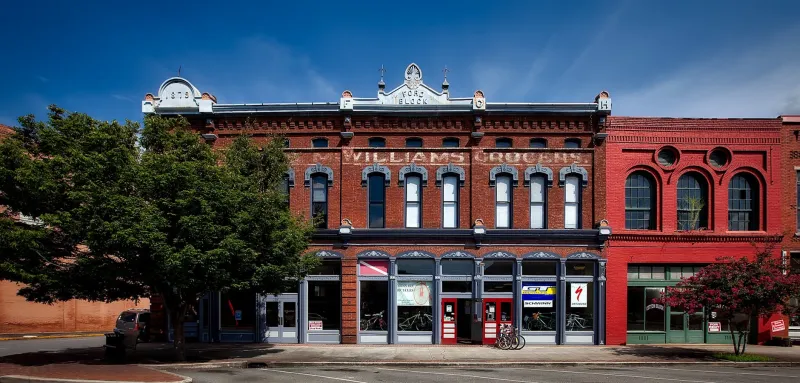
Walk down any Main Street in small-town America today, and you'll find something unsettling: the windows are either empty or filled with the same corporate logos you'd see anywhere else. But rewind to 1975, and that same street told a completely different story.
When Business Was Personal
Back then, Main Street wasn't just a location—it was an ecosystem. The hardware store owner lived three blocks away and coached Little League on weekends. The banker approved your loan because he'd known your family for twenty years, not because a credit algorithm gave you a score. The pharmacist mixed your prescriptions by hand and asked about your mother's arthritis.
This wasn't quaint small-town charm. It was how American commerce actually worked. Business owners had skin in the game because they lived in the community they served. When Mrs. Henderson couldn't afford her groceries that week, the grocer extended credit not because of her FICO score, but because he knew her husband was between jobs and they were good for it.
The local diner served coffee for 25 cents, and the price stayed 25 cents for years—not because of market analysis, but because that's what the community could afford. The barbershop charged $2 for a haircut, threw in local gossip for free, and somehow made enough to send three kids to college.
The Great Replacement
Somewhere between then and now, everything changed. The transformation didn't happen overnight—it crept in slowly, one chain store at a time.
First came the big box retailers in the 1980s, promising lower prices and wider selection. Local hardware stores couldn't compete with Home Depot's buying power. The family-owned pharmacy couldn't match CVS's efficiency. Main Street merchants watched their customers drive twenty minutes to save a few dollars at stores run by managers who'd never heard of their town.
Then came the internet revolution. Amazon didn't just compete with local stores—it made them irrelevant. Why drive downtown when you could click a button and have everything delivered? The convenience was undeniable, but something fundamental was lost in translation.
When Algorithms Replaced Relationships
Today's commerce operates on a completely different principle. Instead of personal relationships, we have data points. Instead of community loyalty, we have targeted advertising. Instead of the shopkeeper who knew your family's preferences, we have recommendation engines that track your every click.
Modern pricing isn't set by what the community can afford—it's determined by algorithms that adjust in real-time based on demand, location, competition, and dozens of other variables. The same product can cost different amounts for different customers, and nobody even knows why.
The local bank where your grandfather got his first business loan? It's now a branch of a megabank headquartered in Charlotte or New York, where loan decisions are made by artificial intelligence that's never set foot in your town. The friendly loan officer has been replaced by an app that approves or denies you in minutes based on data patterns.
The Hidden Costs of Efficiency
On paper, this transformation looks like pure progress. Prices are lower, selection is infinite, and everything is more convenient. Amazon can deliver almost anything to your door in 24 hours. You can comparison shop instantly and find the best deal anywhere in the world.
But we've traded something precious for this efficiency: economic resilience at the community level. When Main Street thrived, money circulated locally. The hardware store owner bought lunch at the diner, which bought supplies from the local distributor, who banked with the community bank. Dollars stayed in town, creating what economists call a "multiplier effect."
Now, most of our spending flows immediately out of the community to corporate headquarters hundreds or thousands of miles away. The barista at the local Starbucks doesn't own anything—the profits flow to Seattle. The manager at Walmart doesn't have decision-making power—everything is controlled from Arkansas.
What We Lost in Translation
Perhaps most importantly, we lost economic democracy. In the old system, local business owners made decisions based on community needs and values. If the town needed a hardware store, someone opened one. If people wanted organic produce, the grocery store started carrying it.
Today, those decisions are made in boardrooms by executives who optimize for shareholder returns, not community benefit. If an algorithm determines that your town isn't profitable enough, your local store simply disappears. There's no appeal process, no community input—just the cold logic of efficiency.
The personal touch that once defined American commerce has been systematically eliminated. Your purchase history is tracked, analyzed, and monetized, but nobody actually knows you. The system knows you bought dog food last month, but it doesn't know your dog's name or that you're worried about his health.
The Loneliness of Modern Commerce
What we've created is technically superior but emotionally barren. We can buy anything, but we can't chat with the shopkeeper. We get personalized recommendations, but from machines that don't actually care about us. We have unlimited choice, but no community connection.
The handshake that once sealed deals has been replaced by terms of service that nobody reads. The store credit based on personal trust has been replaced by credit scores that reduce human complexity to three digits. The neighborhood gathering place has been replaced by sterile chain stores where employees are trained to smile but not to care.
Main Street didn't just lose to better technology—it lost to a different philosophy about how commerce should work. We chose efficiency over relationship, convenience over community, and optimization over humanity. The algorithm won, but we're still counting the cost.