The Golden Age of Public Swimming
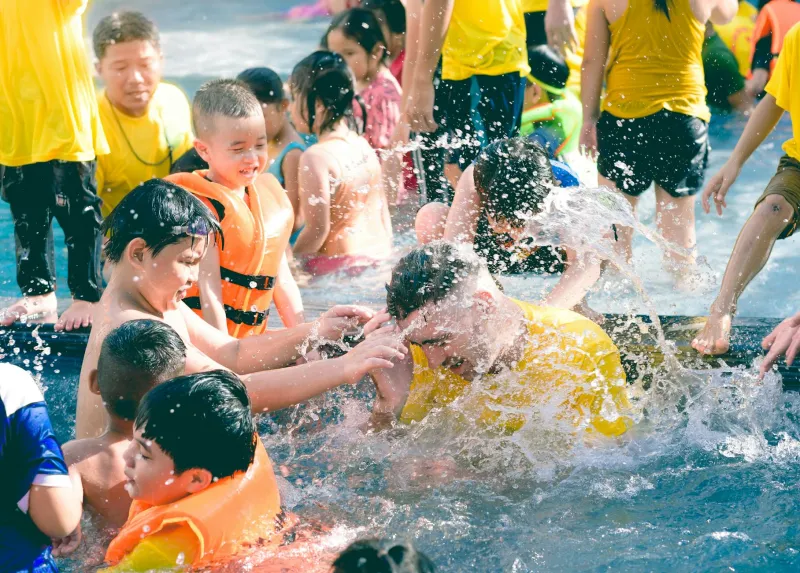
In 1965, nearly every American city with more than 50,000 residents operated at least one public swimming pool. These weren't just holes filled with chlorinated water—they were the beating heart of summer life. Kids would sprint through neighborhood streets, towels flying behind them, racing to claim their spot at the community pool that opened every morning at 10 AM sharp.
The pools were free. Completely free. No membership fees, no guest passes, no HOA bylaws dictating who could swim when. The only requirement was showing up, and maybe remembering to bring a quarter for a Coca-Cola from the vending machine.
These aquatic gathering places served communities in ways that went far beyond recreation. Working parents knew their children had a safe, supervised place to spend scorching summer days. Teenagers found their first jobs as lifeguards. Families who couldn't afford vacations still had somewhere special to go. The public pool was democracy in action—a shared space where the banker's kid and the mechanic's daughter splashed in the same water.
The Slow Drain Begins
The transformation didn't happen overnight. Starting in the 1980s, municipal budgets tightened. Pool maintenance became expensive as aging infrastructure demanded costly repairs and liability insurance skyrocketed. Cities began viewing public pools not as essential services, but as luxuries they could no longer afford.
Simultaneously, suburban development patterns shifted toward private amenities. New housing developments promised residents their own pools, tennis courts, and clubhouses—but only for those who could afford the mortgage and monthly HOA fees. The message was clear: why should taxpayers fund public pools when "responsible" homeowners could provide for themselves?
By 2000, more than 2,000 public pools across America had closed permanently. Philadelphia shuttered 77 pools. Detroit closed all but two of its municipal pools. Los Angeles eliminated nearly half of its public swimming facilities. Each closure represented hundreds of families losing their primary access to recreational swimming.
The New Swimming Divide
Today's swimming landscape looks radically different. Private swim clubs charge initiation fees ranging from $500 to $5,000, plus monthly dues that can exceed $200. Community pools in affluent neighborhoods operate through homeowners associations, creating invisible barriers that exclude anyone who doesn't live within specific ZIP codes.
When public pools do remain open, they're often underfunded and overcrowded. Many operate on reduced schedules—perhaps only afternoons, or just three days per week. Some charge admission fees that would have been unthinkable in previous decades. A day pass at a municipal pool in Phoenix costs $6 per person. For a family of four visiting twice weekly through the summer, that's nearly $400—more than many families once spent on entire vacations.
The result is a stark swimming divide. Children from wealthy families join competitive swim teams and spend summers at country clubs. Meanwhile, kids in working-class neighborhoods might never learn to swim properly, contributing to drowning rates that disproportionately affect minority communities.
What We Lost in the Water
The disappearance of public pools reflects a broader shift in how Americans think about shared resources. The pool that once served everyone has been replaced by dozens of private pools that serve only their members. We've gained exclusivity and convenience, but we've lost something harder to quantify: the casual interactions between neighbors, the mixing of social classes, and the simple understanding that some pleasures should be available to all.
Consider what a typical summer day looked like in 1975 versus today. Then, children from across the economic spectrum would spend hours together at the public pool, forming friendships that crossed neighborhood boundaries. Parents would chat on bleachers while keeping one eye on the water. Teenagers would show off diving skills and flirt awkwardly by the snack bar.
Now, many kids experience summer swimming only if their parents can afford private lessons, club memberships, or homes with backyard pools. The shared ritual of community swimming has fragmented into dozens of separate, exclusive experiences.
The True Cost of Private Paradise
The economics tell a sobering story. Operating a public pool that serves 1,000 families costs roughly $200,000 annually—about $200 per family. Those same families, seeking private alternatives, might collectively spend $2 million on club memberships, backyard pools, and private lessons. Society spends ten times more to provide the same basic service, but now only some children get to swim.
This multiplication of costs extends beyond money. Private pools require individual maintenance, heating, and chemical treatment—multiplying environmental impact. They demand separate insurance policies, equipment purchases, and professional services. We've created tremendous inefficiency in pursuit of exclusivity.
Diving Back In
Some communities are rediscovering the value of public swimming. Cities like Austin and Portland have invested in new public pools, recognizing them as essential infrastructure rather than optional amenities. These facilities serve not just as recreation centers, but as community gathering places that strengthen neighborhood bonds.
The most successful new public pools combine traditional open swimming with programming that serves diverse needs: senior water aerobics, youth swim teams, and family-friendly events. They prove that public pools can thrive when communities commit to funding them properly.
Yet for every success story, dozens of communities continue losing their public pools to budget cuts and privatization. Each closure represents more than just the loss of a place to swim—it's the erosion of a shared space where all children could experience the simple joy of diving into cool water on a hot summer day, regardless of what their parents could afford.
The neighborhood pool was never just about swimming. It was about the radical idea that some pleasures should belong to everyone.